Oops, I podcasted again: Some thoughts on the midterms and the post-Trump future of the GOP.

Well, it's finally happened, I've appended the descriptor of "podcaster" to my name. My friend and fellow historian Thomas Zimmer convinced me that it would be fun for us to gather every other week and talk about current events with an eye toward providing some historical context and perspective that can hopefully shed some original light on the avalanche of thudding bullshit that has become our contemporary news cycle. I must admit to feeling a bit sheepish about launching yet another podcast into the world. Historians like Thomas and me are trained to produce slow knowledge, rather than the sort of **fire alarm emoji** hot takes that tend to be the bread and butter of podcasts. I won't belabor this issue here, but if you're interested in reading more about the tension between historical thinking and the analysis of contemporary events, I mulled over it at greater length in this recent post.
 Seth Cotlar
In short, Thomas and I are not auditioning to become the Joe Rogans of the left. Nor are we going to try to keep up with the news cycle on a daily basis the way Heather Cox Richardson does. We each have our particular areas of interest and expertise, and we will try to stay in our lanes as much as possible. Put most simply,
our goal is to reflect on the state of democracy in America and the world by situating current events in historical context so as to hopefully get some clarity on the range of possible futures that may await us--possible futures to which each of us might contribute in our own small ways.
Below is a link to our most recent conversation in which we talk about how various factions on the US right have metabolized the midterm election results. If this seems like something you'd be interested in, please subscribe to the podcast and (even better) leave us a review or a rating. And if there's anything you'd like us to talk about or guests you'd like to see, let us know!
In this episode we talk about self-styled MAGA intellectuals like Christopher Caldwell and Chris Rufo, the small but persistent community of empirically-challenged election deniers, JD Vance's efforts to distance himself from the Iran War, the antisemitic and white nationalist groypers who are trying to make the GOP theirs, and the relative "normie" Republicans like Harmeet Dhillon and Jeremy Boering who are shocked, shocked to discover that there are religious and racial bigots vying for control of their party. These relative "normies" now say they are determined to purge this electorally poisonous bigotry from the GOP, a poison they insist must either be a foreign or Democratic psy op, or just a handful of people using social media algorithms to create the appearance of significance. Because surely, their party that's been led for 10+ years by the guy who kicked off his Presidential campaign in 2015 by calling Mexicans rapists would never seriously consider embracing racism as a message!
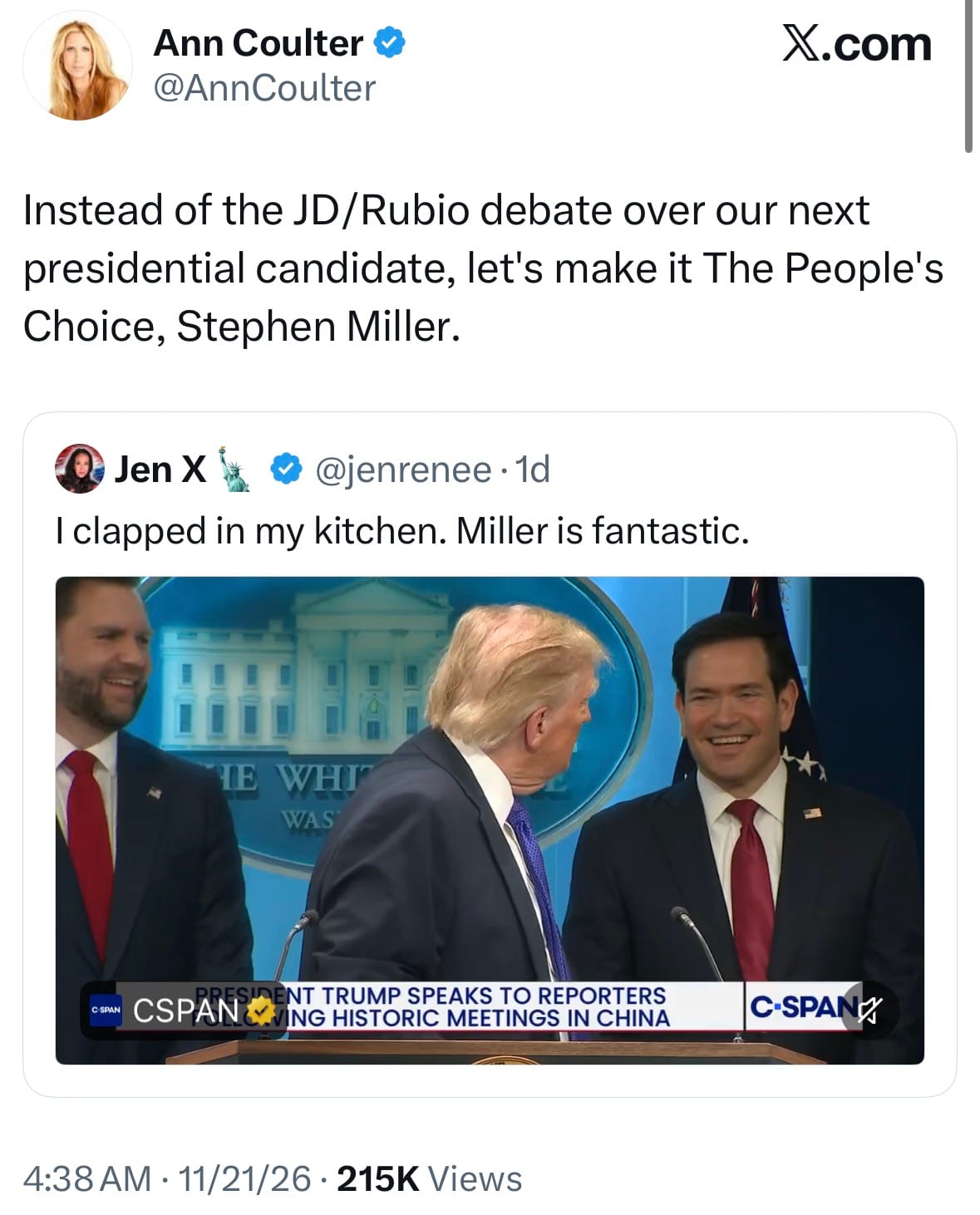
What most stood out to me after spending hours researching the American right's response to the midterm loss is that almost no one took away the message that the Project 2025-informed, hard right policy agenda of Trump's second administration (the Iran War excepted) is the problem. While some people said Trump should have focused more on affordability, I could not find anyone who put forth concrete policy proposals to accomplish that goal. Some commentators, like that éminence grise of the Far Right, Ann Coulter, called for Trump to double down on mass deportations and his most aggressively authoritarian domestic impulses. This is most likely a recipe for a complete GOP wipeout in the 2028 elections, but when your business model revolves around getting clicks more than winning votes as it does for Coulter...then sure, why not, it's Miller time baybee!
In opposition to the "let 'er rip" attitude on the more enthusiastic anti-immigrant and Christian Nationalist side of the GOP, we find figures like the aforementioned Jeremy Boering (co-founder and former head of the Daily Wire) and Harmeet Dhillon (former head of the DOJ's Civil Rights Division). But what's notable about this seemingly more mainstream or "normie" element in the GOP is that their message is mostly an apocalyptic "anti-left" one. It's 99% negative partisanship and 1% "here's a positive vision we have of how Republican governance will improve your life." Take for example this moment where Dhillon calls upon GOP mega-donors to freeze out the more bigoted elements in the GOP coalition in the name of making the GOP more electorally appealing. The very level-headed sell she's making is that unless donors get behind her and Boering's vision of the GOP, then non-leftist Americans will become "permanent slaves of an Islamo-Marxist fascism."
To repeat, Dhillon and Boering are the voices inside the GOP who are saying the party needs to stop putting out a bigoted and conspiracy-obsessed message that's driving away non-white and non-Christian voters...AND they also seem to genuinely believe that tens of millions of people vote for Democrats because they want to make their fellow citizens "permanent slaves of an Islamo-Marxist fascism," whatever the heck that is. These two people are anti-feminists, anti-LGBTQ rights, anti-abortion, anti-DEI, anti-welfare state, and in favor of forceful immigration restriction. They also believe that white people and Christians are some of the most discriminated against segments of the American population. So when you stop to consider that these are the voices of relative moderation on the American right, you can see why the broader GOP is a bit at sea in terms of how to sell the general electorate on their deeply unpopular political vision without pointing and screaming "watch out normie, the Democrats are Islamo-Marxist fascists who are gonna trans your momma."
To the extent that there is passionate intensity on the right that consists of more than Dhillon and Boering's apocalyptic cocktail of zombie Reaganism and warmed over McCarthyism, it takes the form of the aggressively anti-democratic illiberalism of Christian Nationalists and white Nationalists like Nick Fuentes and his ilk. At a recent "New Christian Right" conference in Texas, Fuentes charged his little band of fascist groypers with the task of taking over the GOP by gaining control of local precinct and county positions. If you haven't heard Fuentes speak, it's worth listening to this clip to get an understanding of why so many people find him compelling. Dismissing him as "dumb" or "a liar" is not particularly useful, in my opinion.
The official Young Republican organization of Texas responded affirmatively to Fuentes's call, encouraging their members to hit the pavement and begin the process of taking over the state Republican Party apparatus precinct by precinct, and county by county. (An important detail here is that the Young Republicans of Texas is a recent, and more aggressively far right splinter group from the previous official organization, the Texas Young Republican Federation. You can read about this recent internal kerfuffle here.)
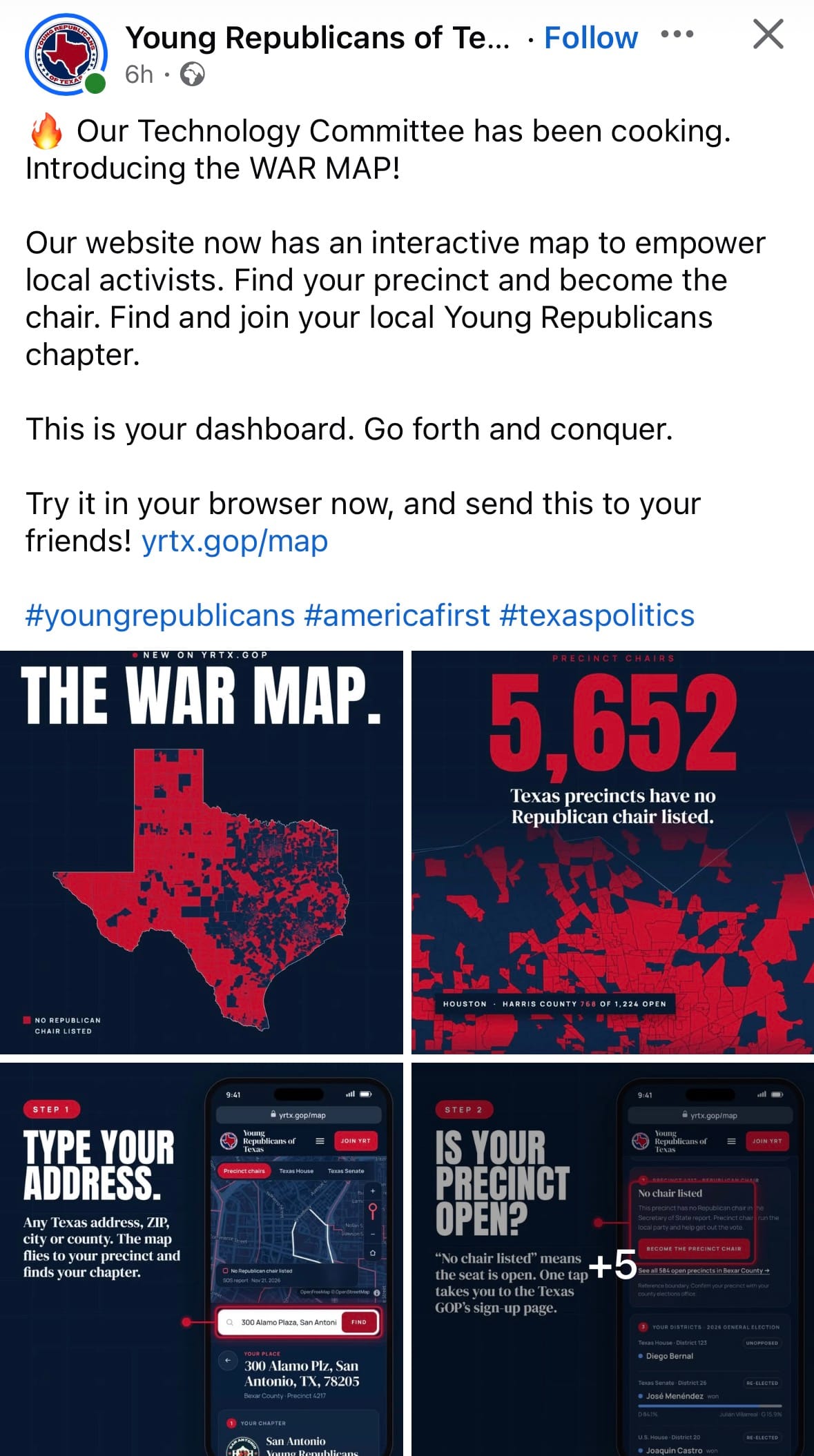
To be clear, I don't think Fuentes's avidly Hitler-admiring version of the Republican Party is going to become the dominant electoral message of the national GOP any time soon. Fuentes talks a big game about how substantial and energized his following is, but he's never actually accomplished anything in the real world of politics. Aspiring fascist leaders always exaggerate their power and influence in an effort to intimidate those who might speak out against them, and there's no need for people on the left to play into that tactic by inflating Fuentes's importance. The substance of Fuentes's white Christian nationalist political vision is vile and implicitly genocidal, so there's good reason to be concerned about how influential he's become in the world of right wing social media, especially amongst young people. But Fuentes is far from being anything like a king maker in national Republican politics.
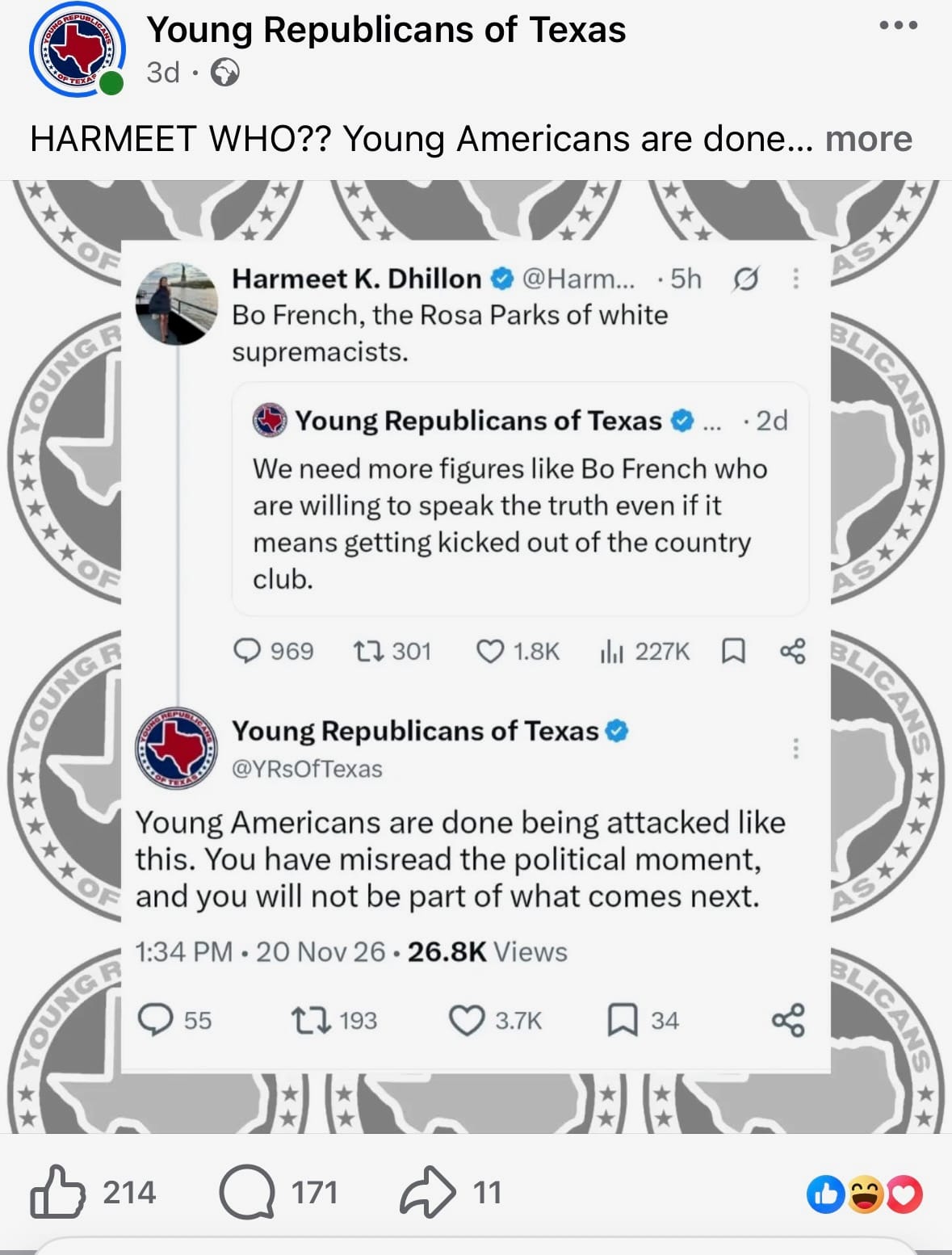
That said, I do think there's a decent chance that these young groypers and their elder racist soulmates like Bo French could take over the Texas GOP in the coming years if they actually commit themselves to implementing this sort of insurgent, precinct-by-precinct strategy.

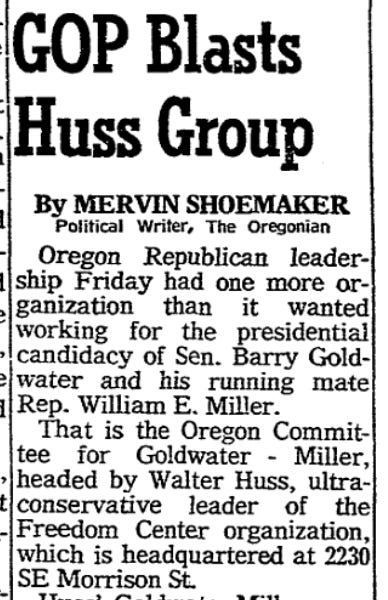
I know a bit about this grassroots strategy for taking over a state GOP apparatus, because in 1962 a fringe, antisemitic white Christian nationalist in Oregon named Walter Huss adopted it. After over a decade of working to take over the OR GOP using the same sort of strategy that Fuentes described in that video, Huss finally succeeded when he was elected state chair in 1978. For folks who are newer to this Rightlandia blog, I've told much of this story in these three posts.
 Seth Cotlar

 Seth Cotlar
 Seth Cotlar
The 2020s are very different from the 1960s and 1970s when Huss successfully implemented this strategy...and Texas today is a very different state than Oregon was back then. So I'm not saying that there's anything predictive about the comparison I'm making between Huss and Fuentes. But I think Huss's case stands as a warning, but one with a possible silver lining.
The warning contained in Huss's story is that until he succeeded in becoming the chair of the OR GOP in 1978, no one (aside from him and his followers) thought that a "fringe kook" like him could ever achieve such a thing. In 1975, just three years before Huss was elected chair, an excellent scholar named Scott McNall published a book that grew out of his dissertation research as a participant-observer in Huss's organization in the early 1960s. It's a very insightful study, but note the 1975 subtitle: "A Study in Failure."
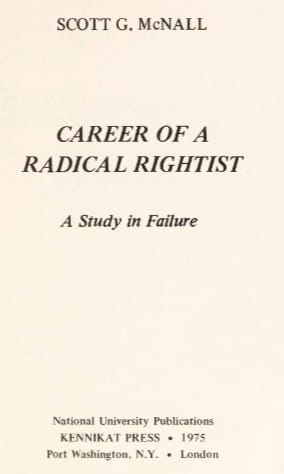
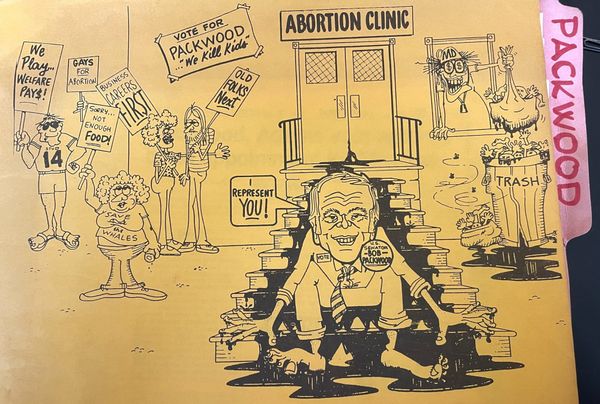
Huss's story is a reminder that contingency matters. Even though Huss was relieved of his chairmanship less than year into it, his 1978 victory marked an important turning point in the history of the OR GOP. It emboldened the far right Christian nationalists in their coalition, and put the formerly dominant moderates on their back heels. By the mid 1990s, the forces that Huss mobilized and the constituencies he brought into the activist base of the OR GOP had supplanted moderates like Mark Hatfield, Bob Packwood, and Tom McCall who'd once dominated the party.
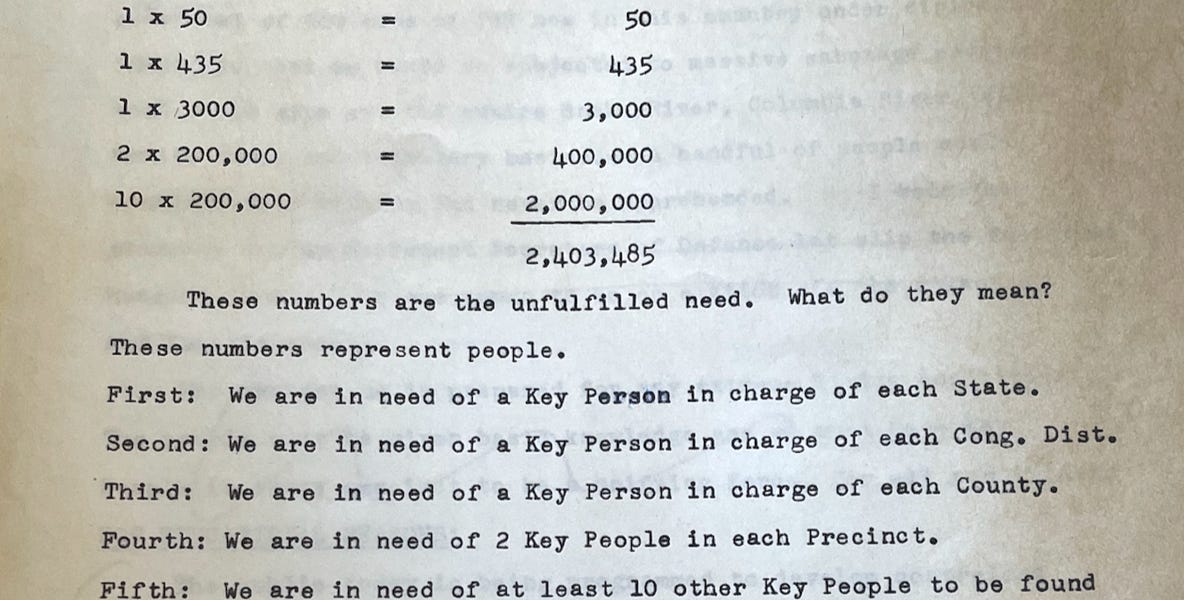
Note how similar the pitch Huss made in this late 1960s pamphlet is to that made by the Young Republicans of Texas. It only takes two votes to get elected precinct captain and no one ever runs. So get your name on the ballot, have your spouse or a neighbor vote for you, and then you're in. Now you have a say in state level GOP politics!
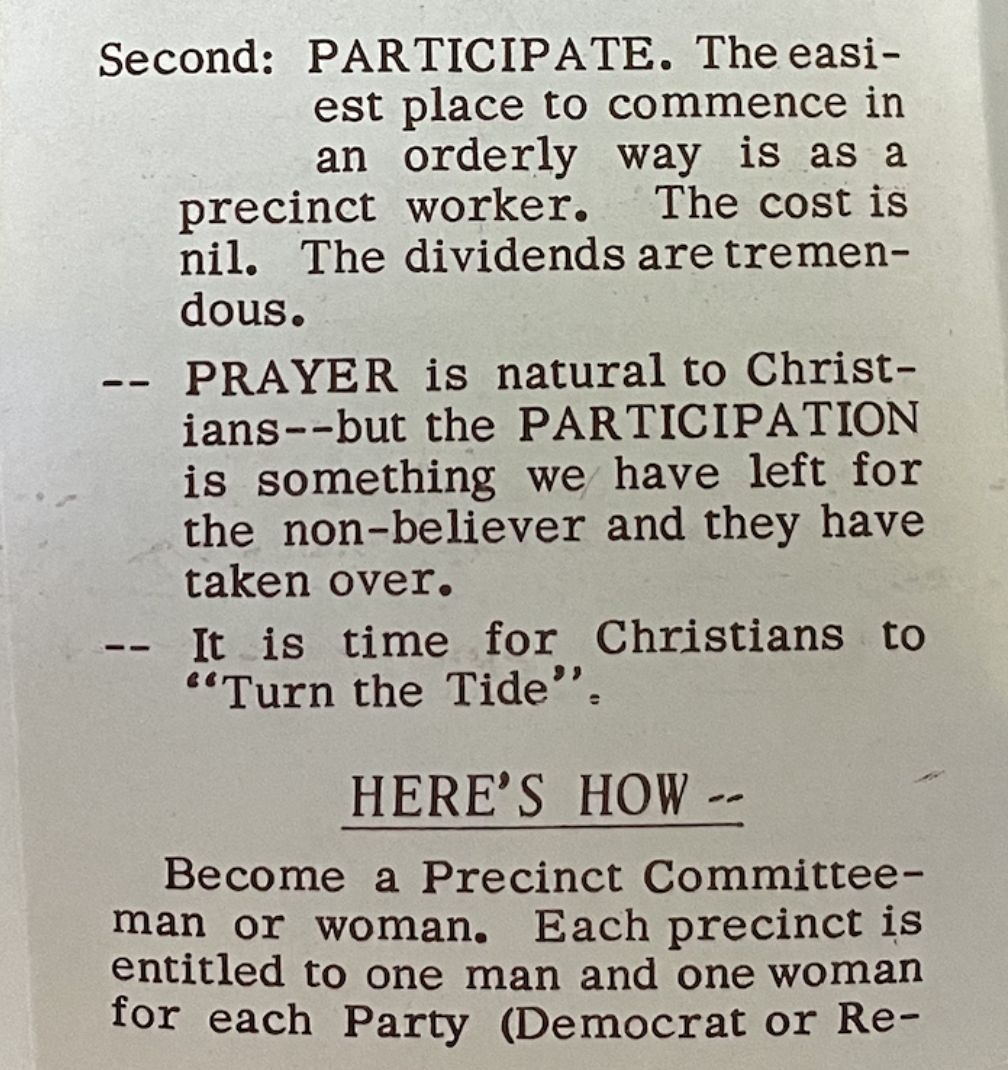
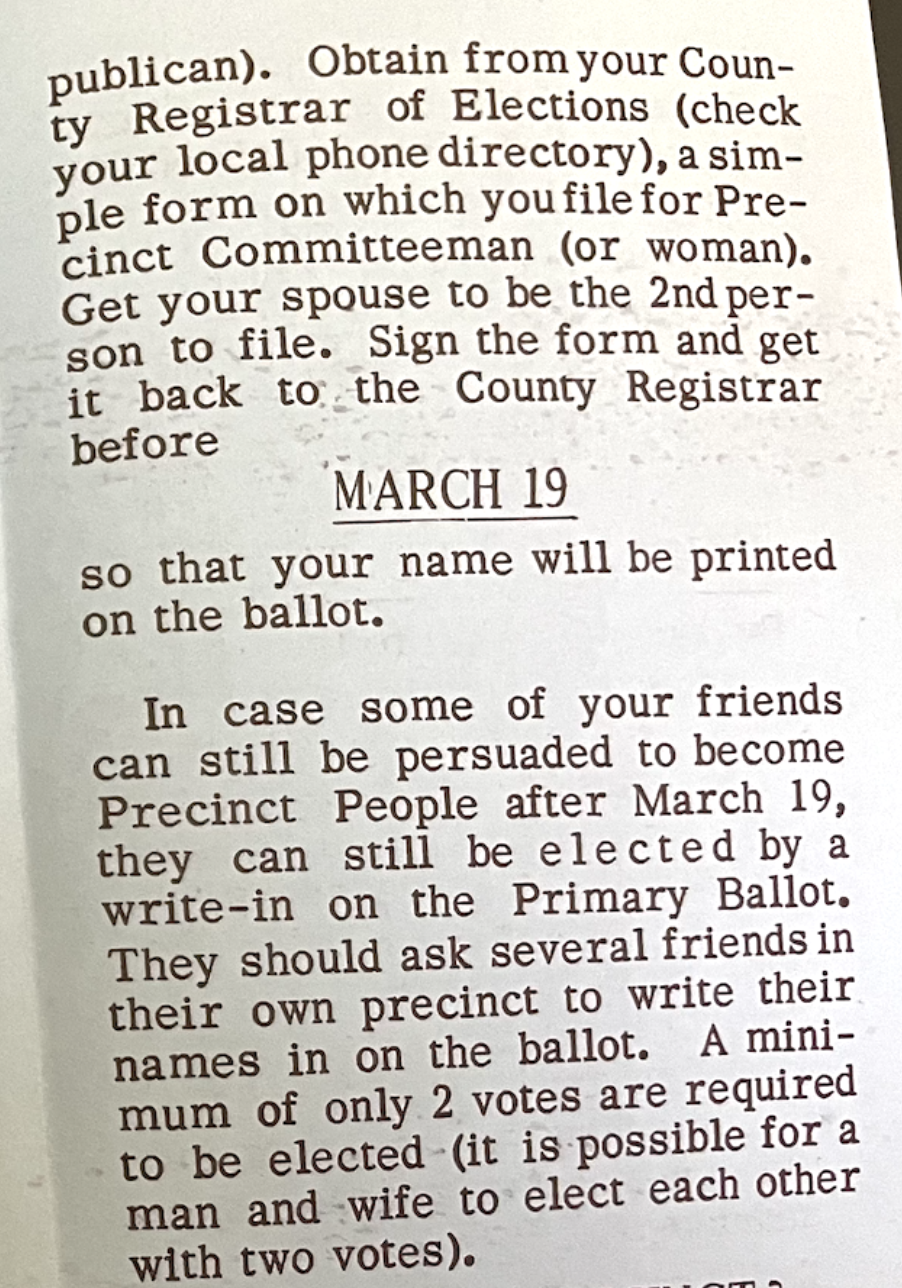
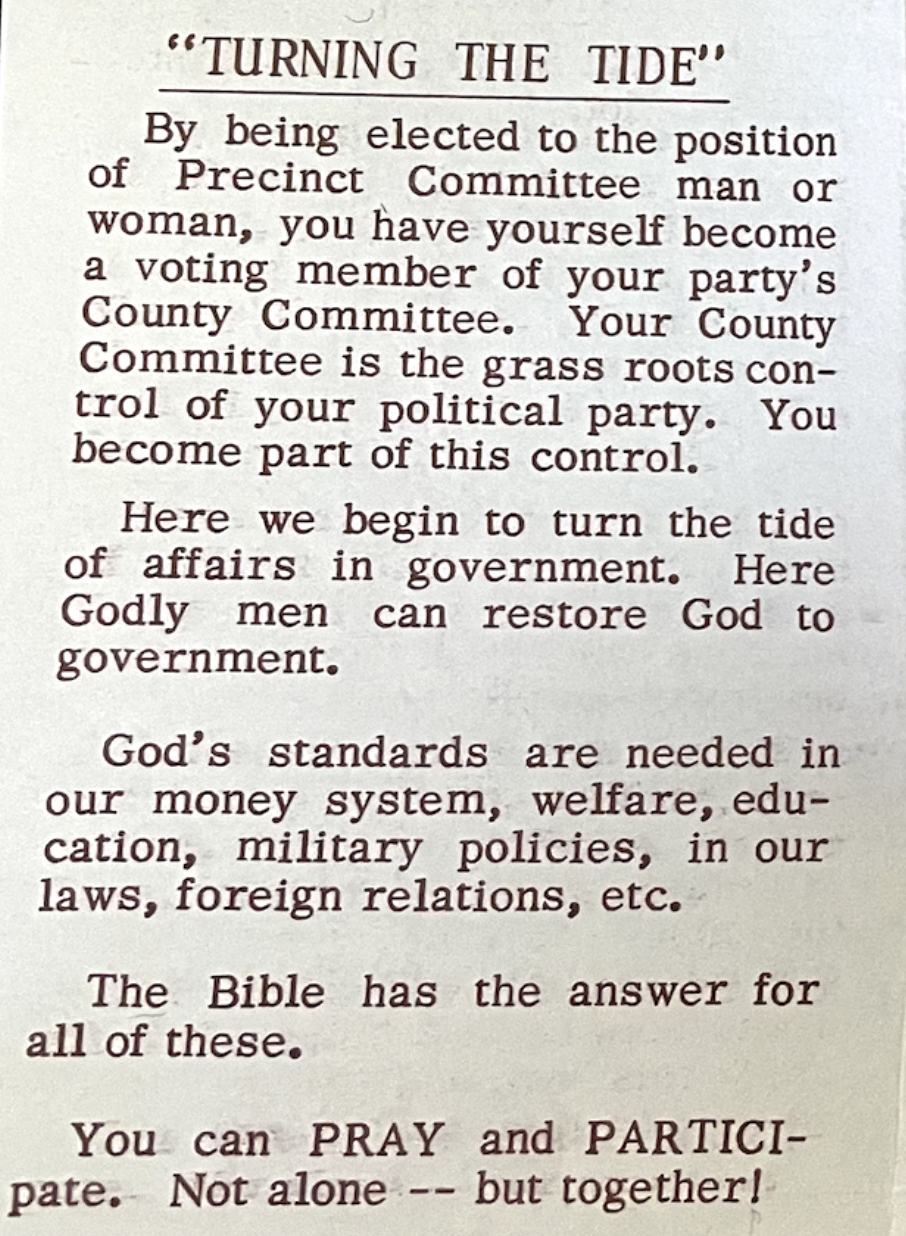

In the 1960s Walter Huss was fighting an uphill battle to take over the OR GOP because the party was dominated by popular and well-funded moderates. In Texas today, however, white Christian nationalism has the wind and the big money at it's back. In 2023 Fuentes met with a big wig in the TX GOP and few people in Texas seemed to care all that much.
 Robert DownenDemocracy Reporter

Two of the TX GOP's most influential donors are already on the Bo French, far right Christian nationalist train. It's hard to see them pushing back against this groyper insurgency in any meaningful way.
 Ava Kofman
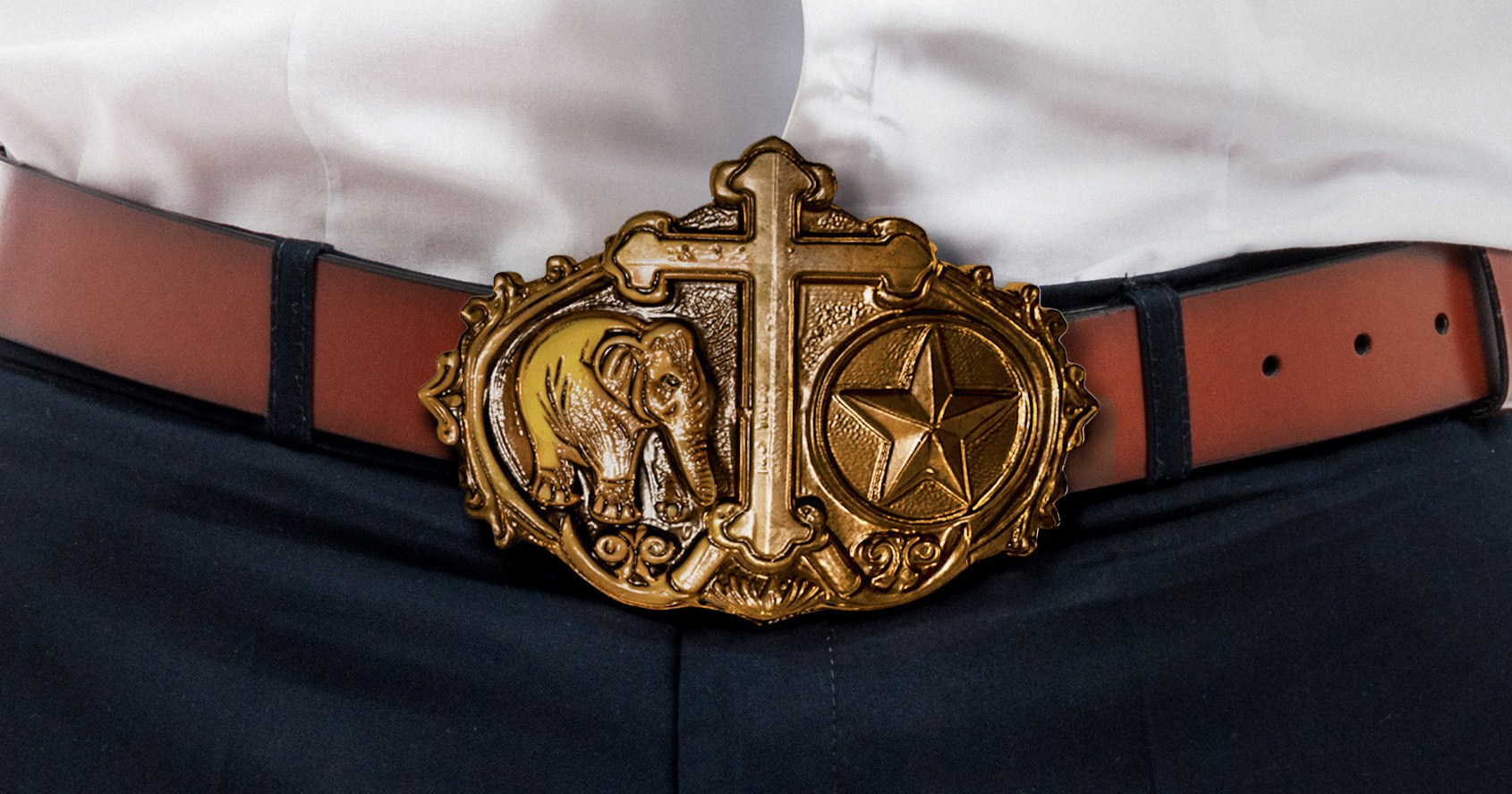
If the Fuentes/French forces of white Christian nationalism are able to take over the TX GOP, then that means the party will nominate more candidates like Bo French and Ken Paxton...precisely the sort of candidates capable of snatching defeat from the jaws of victory in the generally quite red state of Texas.
And that is the silver lining part of this story. If the TX GOP goes the way of the OR GOP (or the Washington GOP or the California GOP) and just continues to move ever rightward and ever further away from the electorate, then Texas could follow the same path that states like Washington, California, and Colorado have in recent years. Republicans used to be quite competitive in statewide races in all of those states in relatively recent memory, but as their state GOP organizations have continued to radicalize (as happened in Oregon in the 1980s and 90s), they have become less likely to nominate candidates who can win general elections.
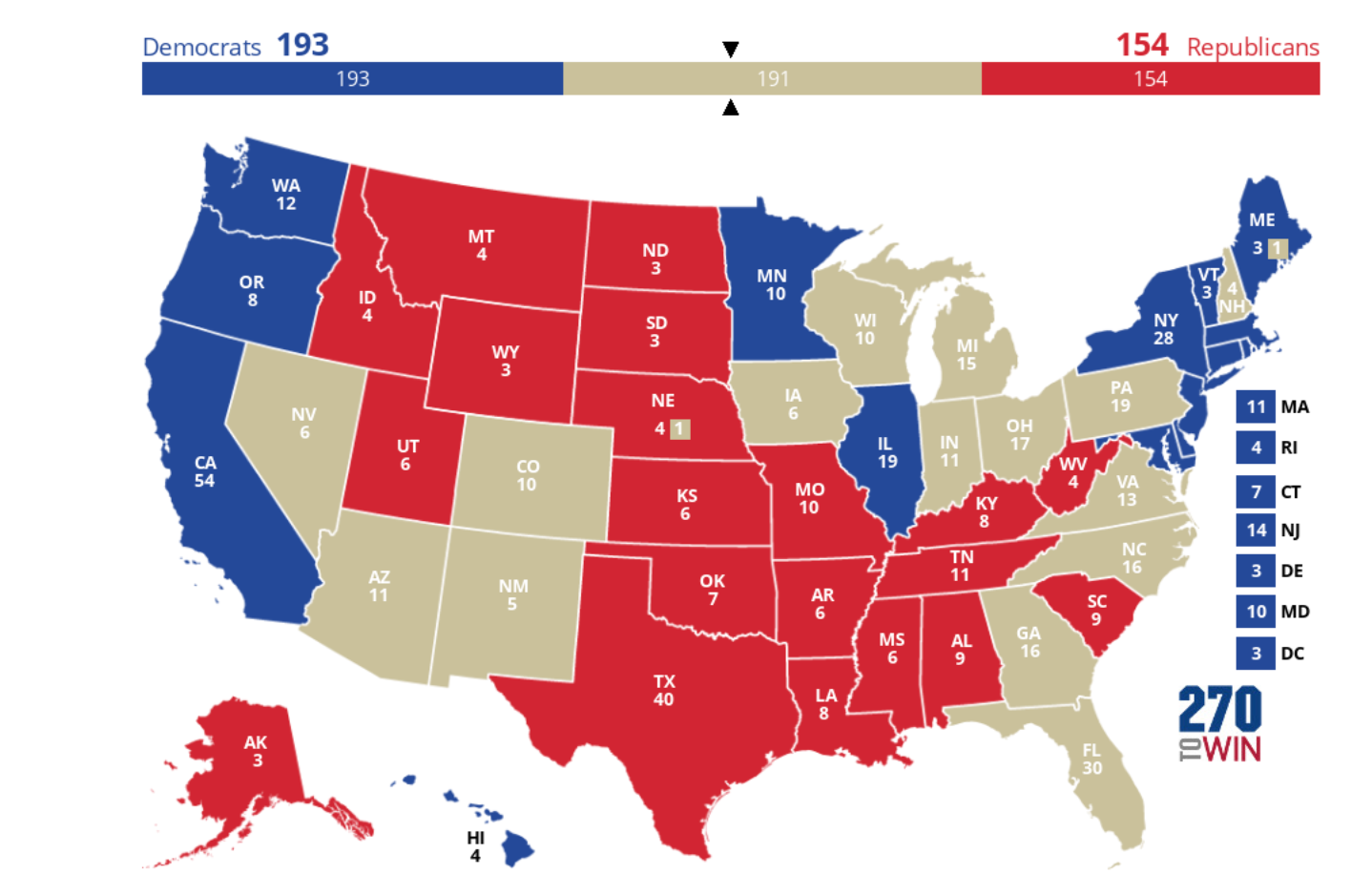
So if Ted Cruz becomes a target of the far right's ire in the 2030 primary as John Cornyn did in this one, there's a chance that someone who's even more of a right wing wacko than Cruz could get the nomination, clearing a path for a more likely Democratic victory. Even if Cruz does get the nomination, there's a chance that this year's blue wave might carry over into future elections and he'd be defeated anyway. And that's not even to mention the Electoral College implications if the TX GOP succeeds in driving enough voters away that the state becomes reliably blue. Check out this electoral map from 2024 marking reliably blue and reliably red states. Add Texas's 40 electoral votes to that list and a GOP path to the presidency starts looking mighty narrow.
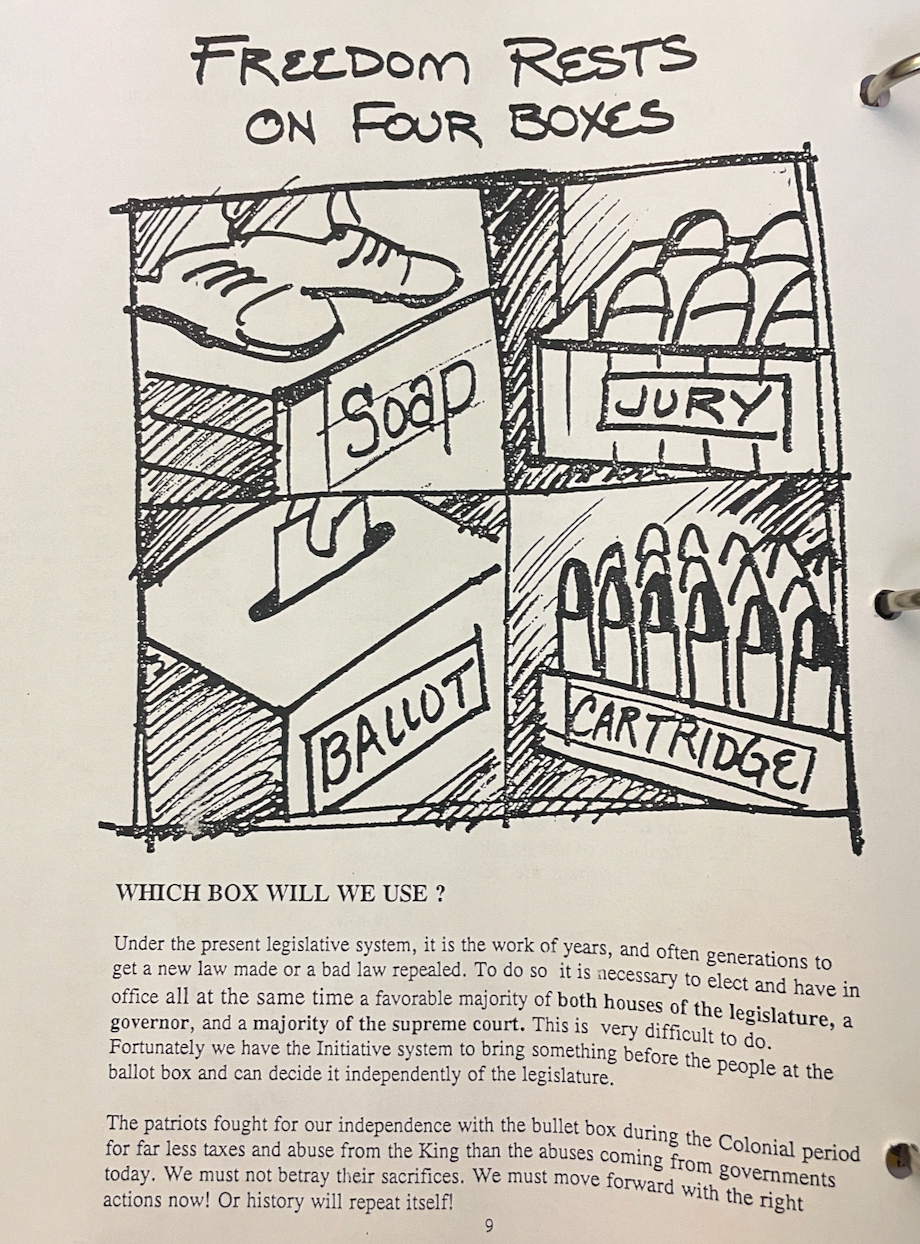
Before anyone starts future tripping too much about a future of Republican irrelevance, there is absolutely no guarantee that this dynamic will play out as I projected here. Even if it does and the state level GOP organizations in more and more purple and red states go off the deep end like they have in Michigan, Colorado, Pennsylvania (remember Doug Mastriano?), and Washington, this would still create a pretty volatile political situation. Back in the late 2010s a study found that Oregon was one of the five states where political violence was considered to be a serious threat. I remember people at the time being surprised that such a blue state would fit that description, but it makes perfect sense. In a state where Republicans have experienced decades of defeat and have only moved even more rightward, a significant number of self-described "conservatives" have talked themselves into believing that they may have no other choice but to shoot their way out of the "communist hellhole" that they think Oregon has become. When far right political movements decide that electoral politics is no longer a viable route to power, violence is often the next solution they move on to. Huss himself frequently eluded to the idea that true patriots might someday have to resort to "the cartridge box" if things got bad enough.
I've been writing about the Republican Party's history and mulling over it's possible future form because as someone who would prefer to live in a democracy, I'm worried about what will happen should one of our two parties decide to finally give up on small l, liberal democracy for good. One needn't be nostalgic for the "good Republicans of yore" to be concerned about the much worse Republicans that might lay ahead in the future.