A Semester of Living Inside History--literally and figuratively, and for better and worse
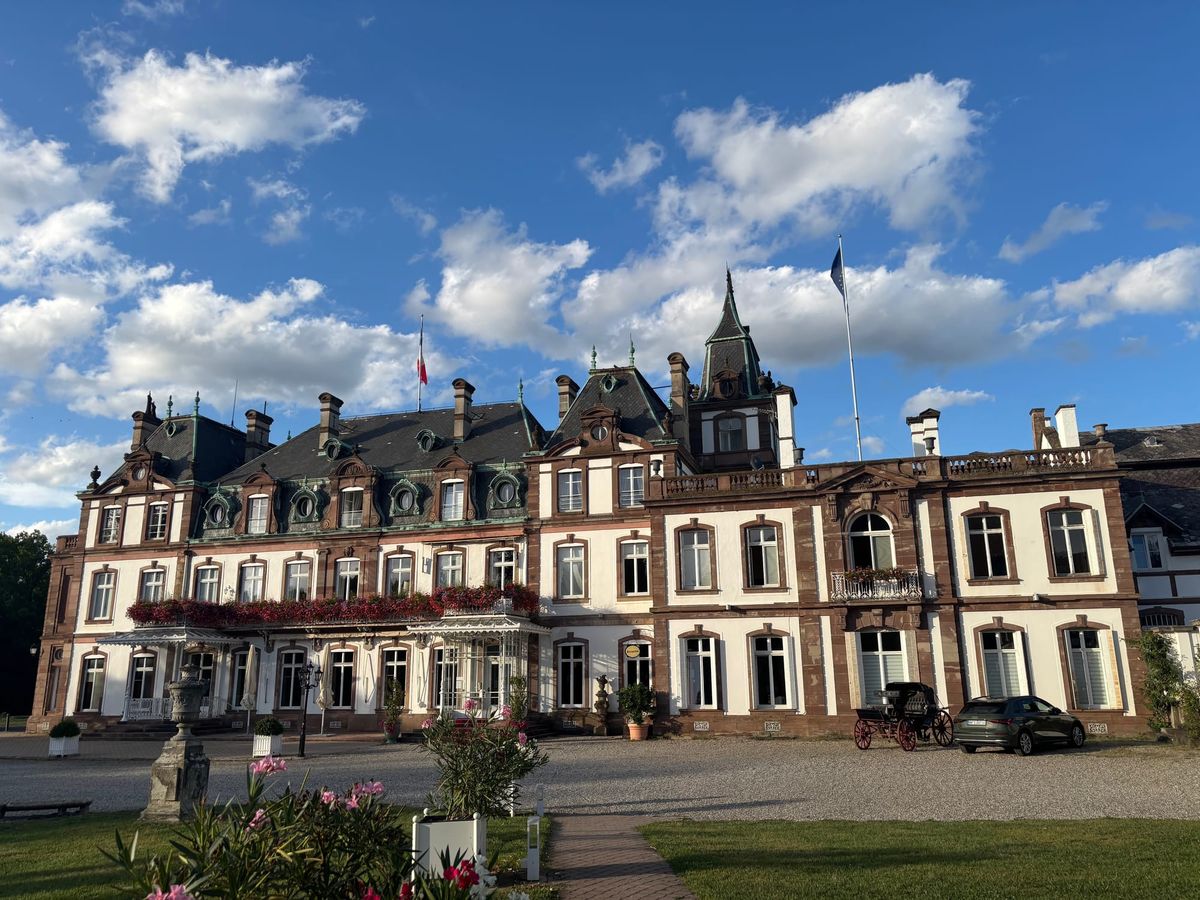
This fall I'm leading Willamette's study abroad program in Strasbourg, France. The students and I are housed at a grand, historic chateau (pictured above) located in a 60 acre wooded park on the outskirts of the city. It's a stunningly beautiful location, and the old center city of Strasbourg offers a bounty of architectural, gustatory, and cultural delights. Strasbourg is also home to the European Parliament, the European Court of Human Rights, and several other foundational EU institutions that comprise the post-WWII liberal European order. The students are taking a course on the history and politics of the EU at the Chateau that's being taught by a French academic who once served as the political director for NATO, not too shabby credentials for someone teaching such a course. That's the "for better" part of this story about living inside of history.
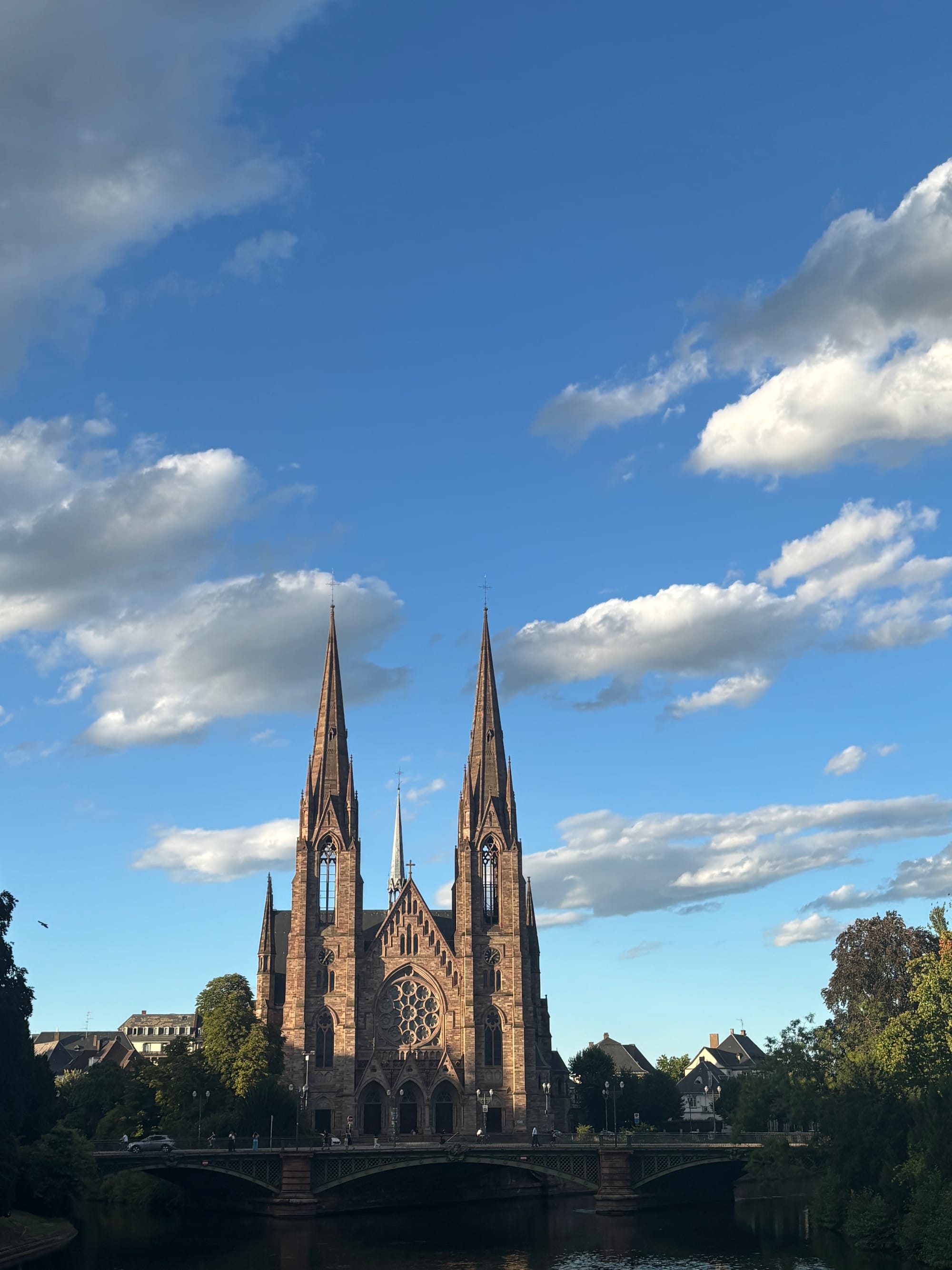
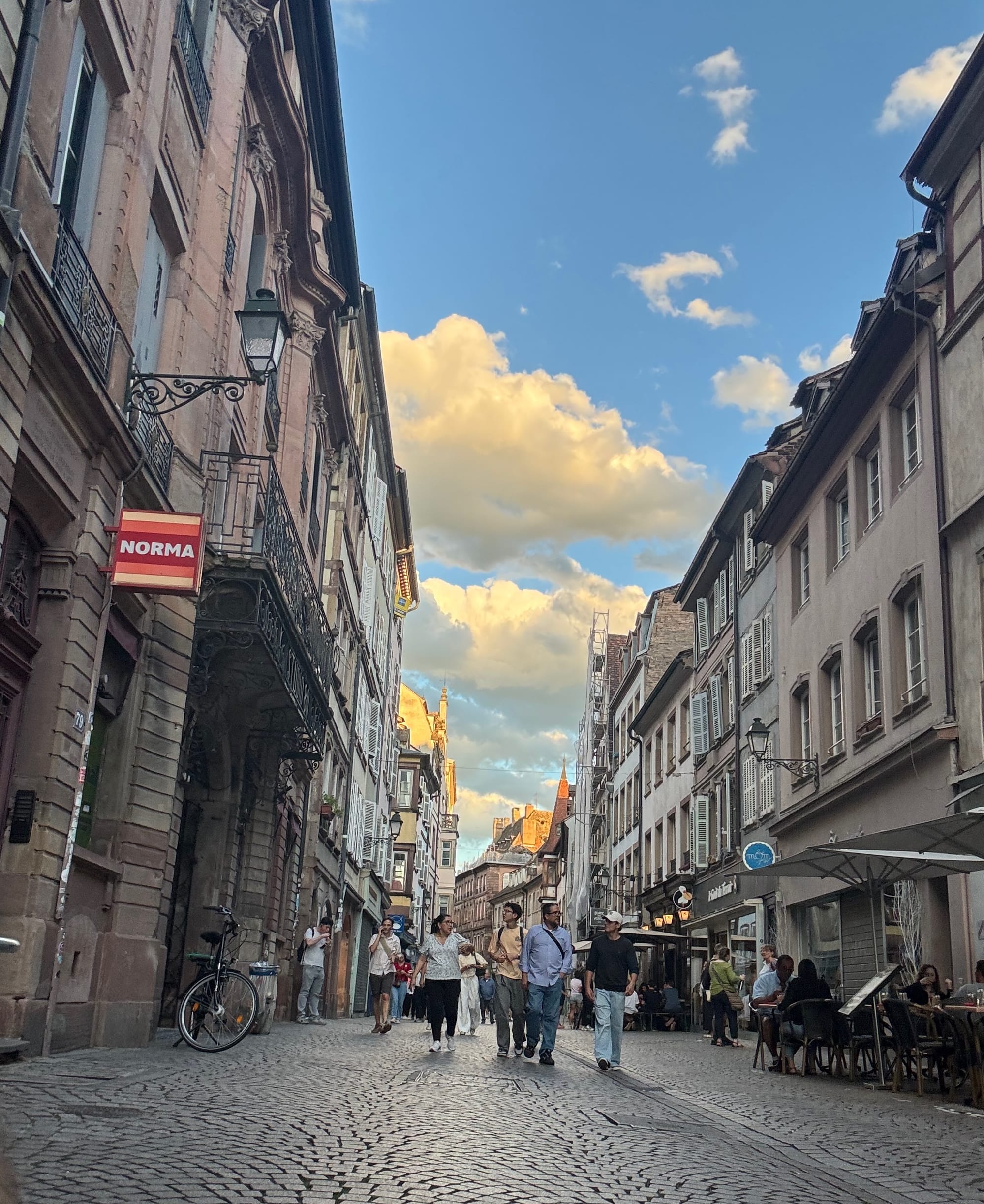
Left: St. Paul's Church. Right: A typical street scene, in this case taken from my seat at an outdoor cafe
The "for worse" part is...like all history...complicated.
I often joke that when I'm visiting somewhere in the US and people find out I'm a historian they'll frequently say to me "there's a lot of history here"...as if time somehow didn't pass in that dumpy little town down the road. But yeah, when it comes to this Chateau and this city...there's a lot of history here, and that history feels especially pressing these days when liberal democracy in the US, Europe, and elsewhere is on the ropes.
I'm going to be spending a lot of time thinking about democracy on the ropes this semester because I'm teaching a course for the visiting American students on The Far Right and Democracy in Europe: 1920-present. It's primarily a history course, but since most of the students are NOT History majors, I've assigned a good amount of readings on contemporary issues as well. Here's how I described the class in September of last year when I first envisioned it:
In 2023, the Strasbourg-based Council of Europe published a report on “The challenge of far-right ideology to democracy and human rights in Europe.” This course will explore the global history of the far right from the 1920s up to the recent present, paying particular (but not exclusive) attention to the European and US dimensions of that history. The class will begin with the problem of definition–what do scholars mean when they use the term “far right?” What distinguishes a “center-right” political party or movement from one designated “far right?” The class will then trace the evolution of far right parties and ideas from the 1920s to the present, using Cas Mudde’s 2019 book The Far Right Today as our guide. Although it is impossible to predict what the political landscape will look like as we move through the fall of 2026, there’s no doubt that many of the key themes in the current scholarship on the far right–immigration, deindustrialization, nationalism, religion, populism, gender, sexuality, social media, and so on–will remain salient. One central goal of the course will be to balance a broad, thematic understanding of the continuities across far right mobilizations in different countries, with an attentiveness to the distinctive history of each nation’s far right. It’s likely that one of the European political institutions based in Strasbourg will be substantially engaged in some way with the issue of the far right, and one priority for the class will be to get students plugged into those conversations as fully as possible. Students will also have the opportunity to conduct in-depth research into the history of the far right in specific European countries.
Well it's now the day before classes begin here in Strasbourg, and the German province of Saxony-Anhalt looks prepared to put into power the far right AfD party, the first time a far right party will have risen to such heights in Germany since the 1940s. [Editorial note: since I wrote this sentence, the AfD did indeed win 44% of the vote in Saxony-Anhalt and fell only 3 seats short from being able to form a government by themselves.]
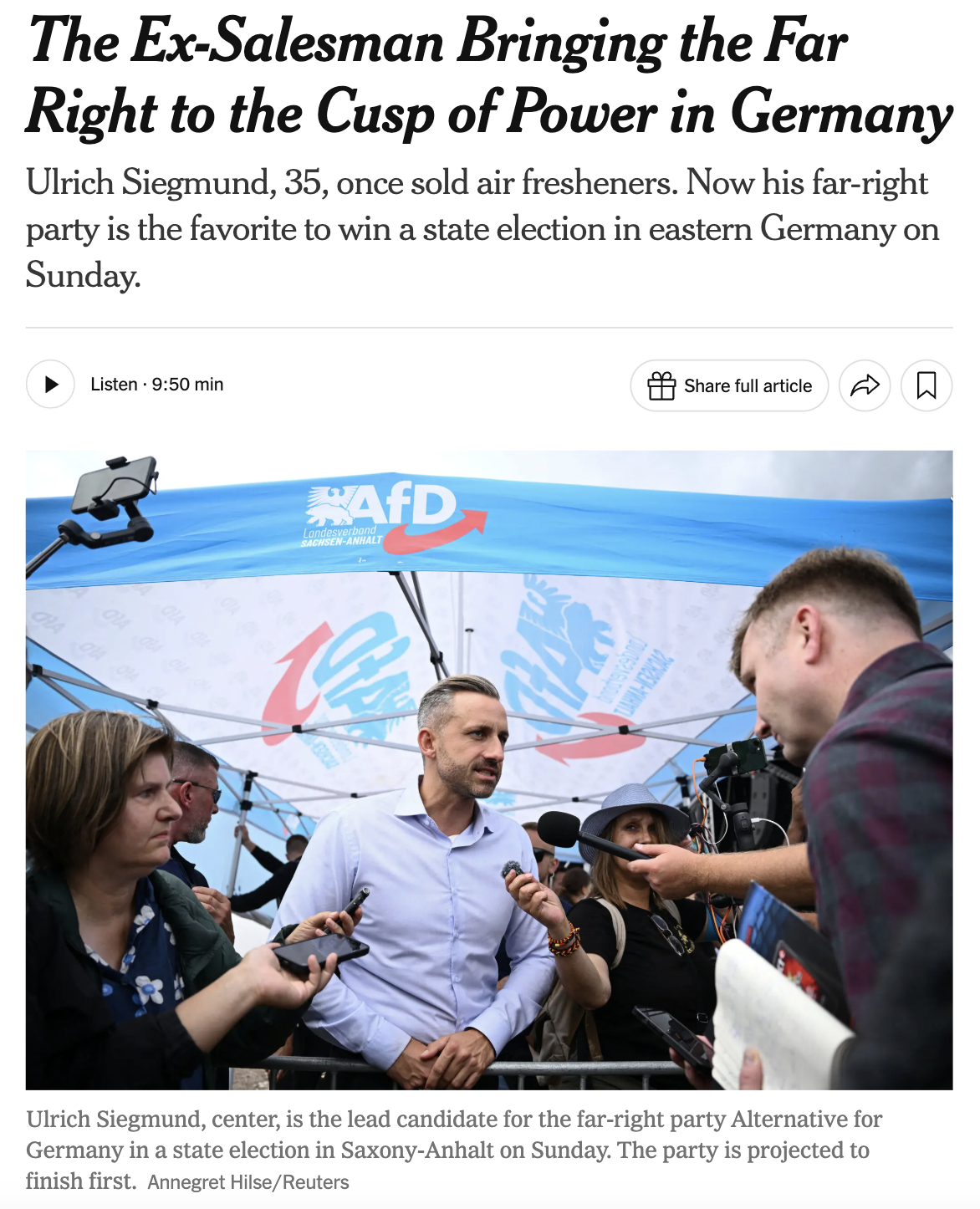
Although pro-AfD propagandists like Elon Musk and JD Vance claim that the AfD is just a normal, centrist kind of party, most people who understand history and contemporary politics consider the AfD to be a far right party that provides a hospitable home to a host of violent, hateful, anti-democratic extremists. The spokesman for the AfD's charismatic young leader in Saxony-Anhalt, for example, was involved with a youth group inspired by the Hitler Youth, while the person who makes that leader's campaign videos was an activist in the ethno-nationalist Identitarian movement. After AfD's win, groups of enthusiastically angry young men swarmed onto the streets to harass immigrants and others whose existence on German soil they consider to be existential threats to their "homeland."
Saxony-Anhalt is a fairly small province and has long been a right wing stronghold, so there are reasons to hope that this is not an ominous sign for the future of German and European politics more broadly. But still, anytime something happens in far right German politics for the first time since the 1940s, it would be hard to describe the vibes as anything but "not great."
Speaking of unsettling vibes, I'm almost certainly sleeping in a room this semester where a Nazi officer or two slept in the early 1940s. As you can see on the map below, Strasbourg sits on the French side of the Rhine River which divides France and Germany. So when the Germans invaded France during WWII, Strasbourg was one of the first cities they occupied.
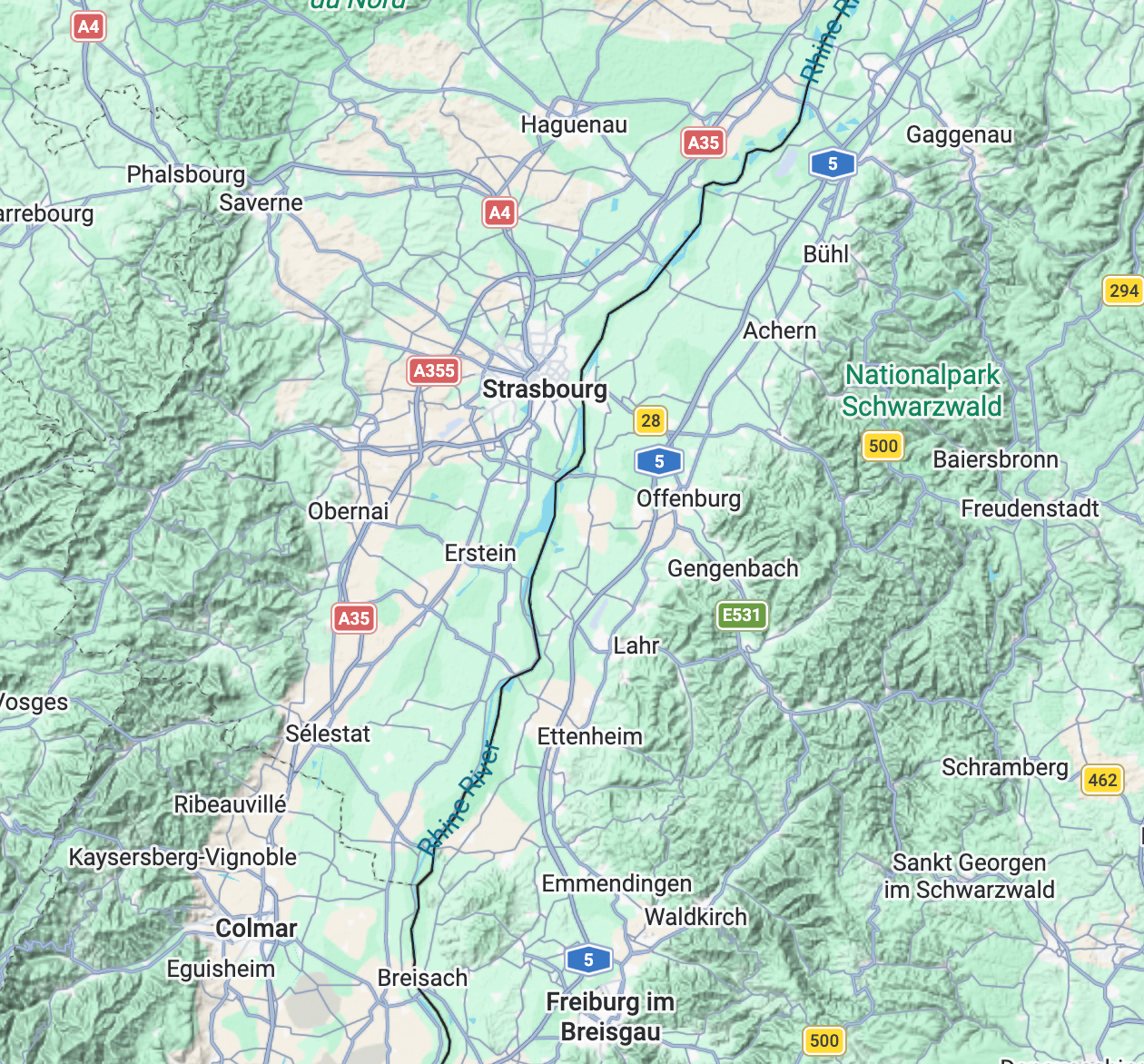
The Germans transformed the Château de Pourtalès, which had been abandoned by its owners in anticipation of the invasion, into quarters for high-ranking officers. The Chateau understandably does not have signs in each room identifying which specific Nazi officers "slept here," but all the same, we know it happened. I think of it as the evil twin of the "George Washington slept here" phenomenon in the US.
When one travels in Europe, especially in areas that were occupied by the Nazis, it's hardly a surprise that one might find oneself sleeping in a room where Nazis once slept. Had this been thirty years ago, this would have struck me as a kind of funny historical reversal...here I am, a Jew descended from Jews who fled Europe for America just a few decades before they would have likely been murdered by Nazis...sleeping happily in a place where some dead and defeated Nazis once slept. Good riddance.
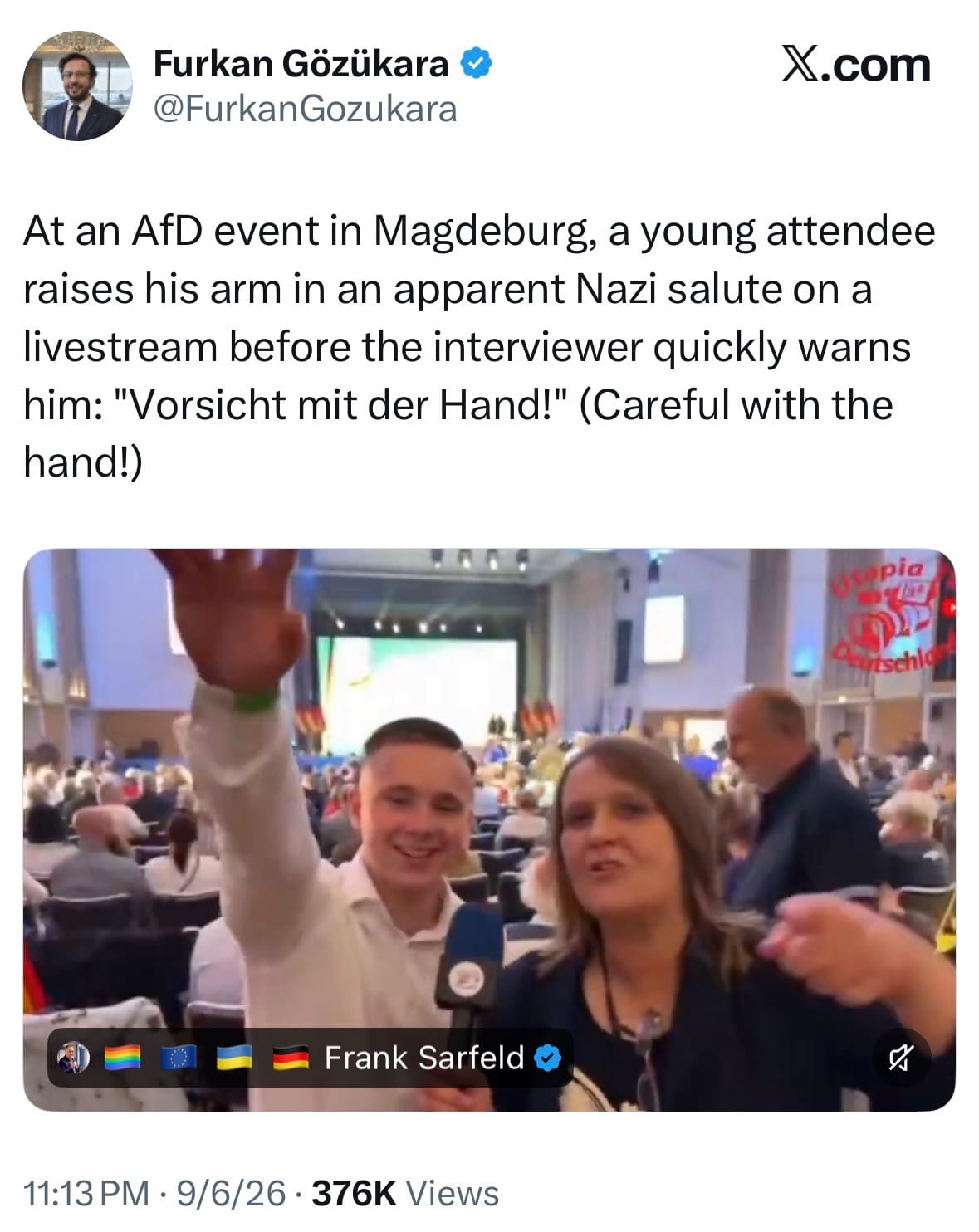
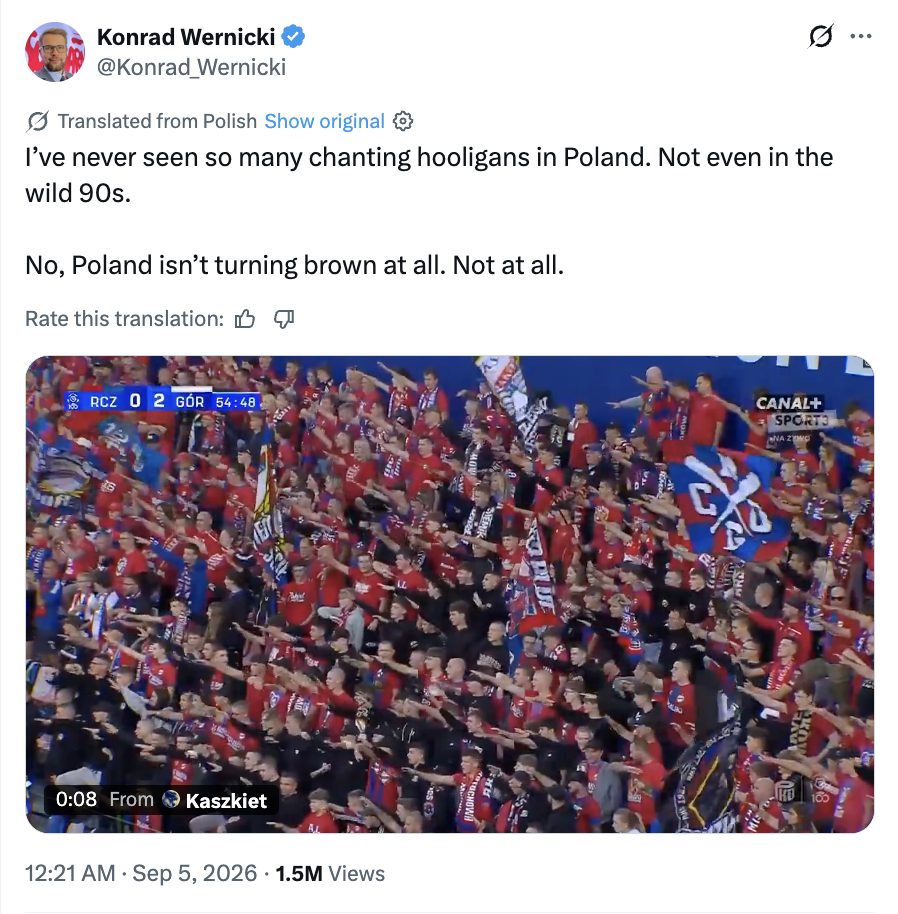
But with a party descended from the Nazis winning elections in Germany for the first time since the 1940s and public Hitler salutes spreading like a virus through the political cultures of multiple European countries right now, the ghosts of those Nazis past aren't feeling as immaterial and easily dismissed as I'd like.
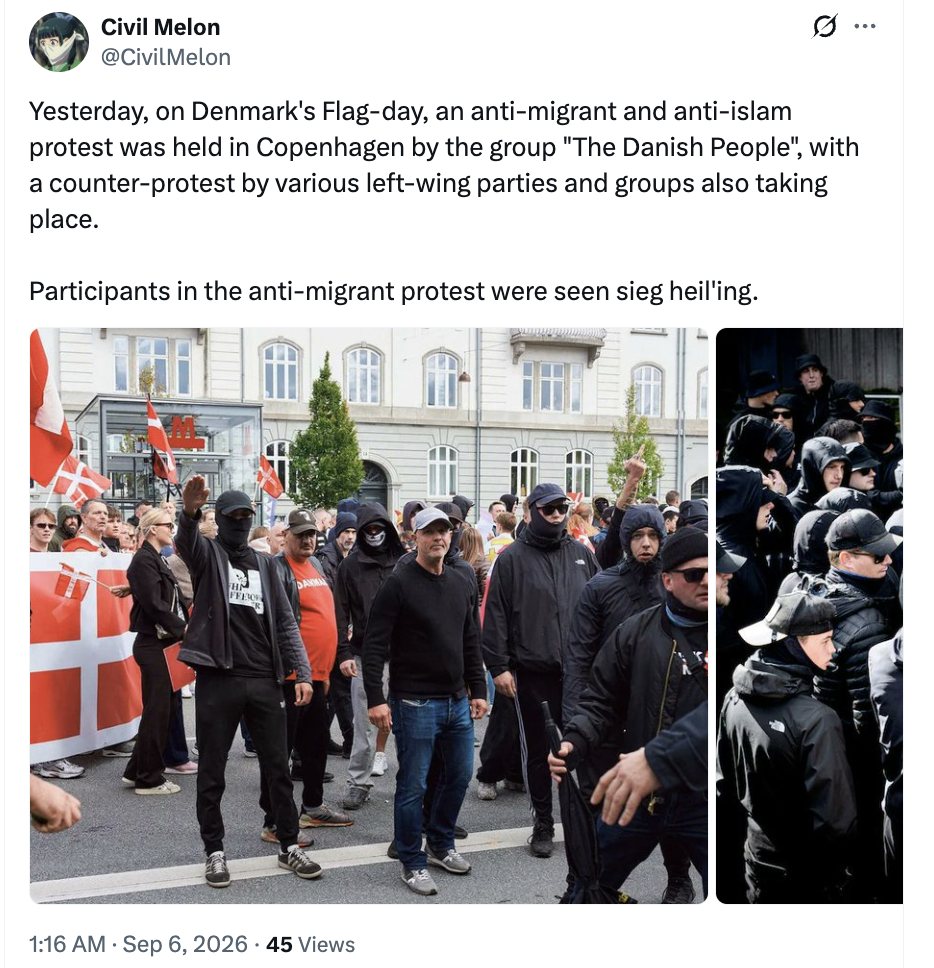
Before coming to Strasbourg we spent a few nights in Paris. When I opened the drapes at our Airbnb I noticed that there was some sort of memorial beside the front door of the school across the street. [It's on the bottom right of this picture.]
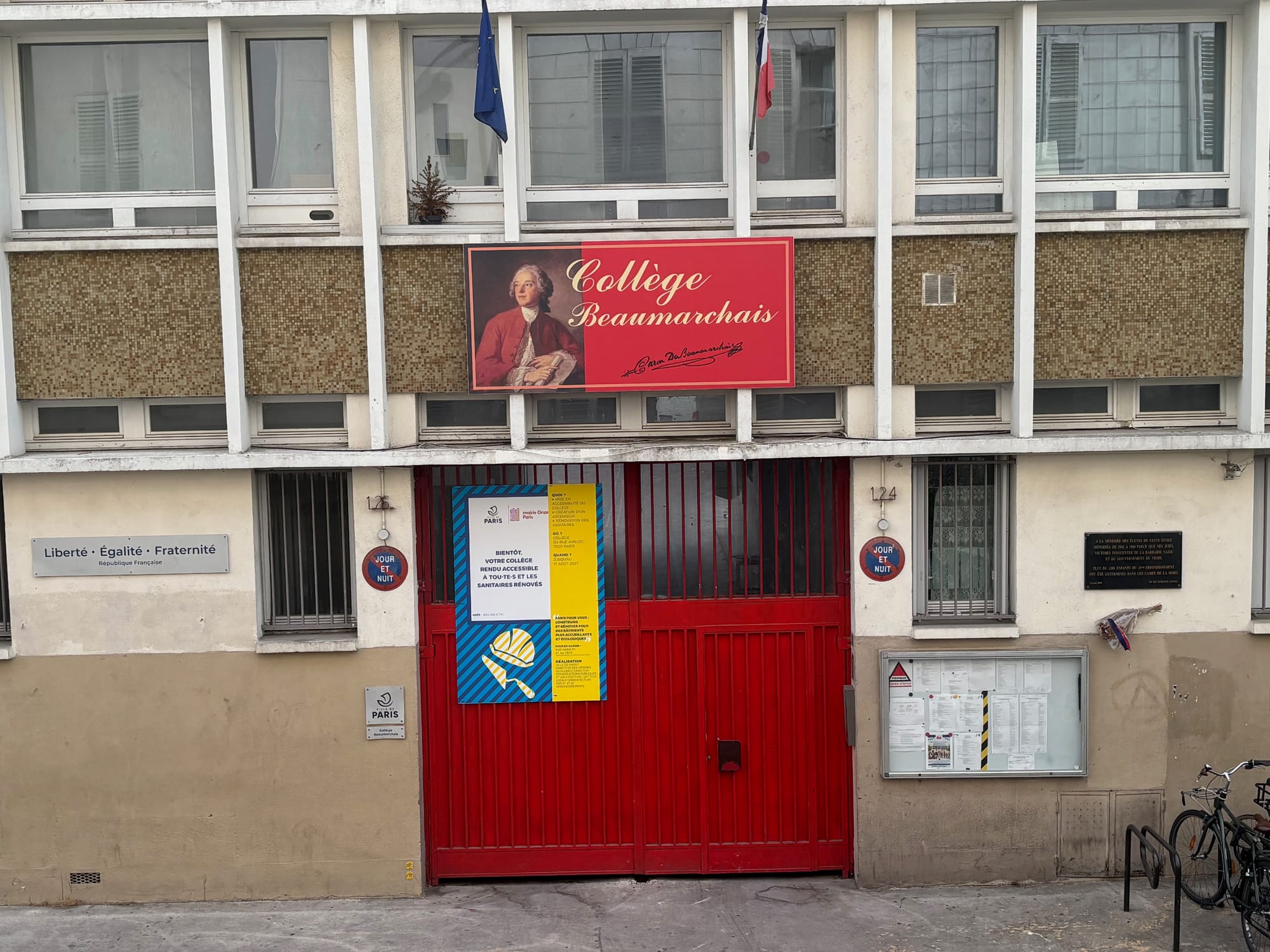
When I went outside to look more closely, I saw this sign honoring the memory of the children from the school, and the 1200 children from this Paris neighborhood, who perished in the Nazi death camps. I walked past several other schools that had similar signs--in some cases noting that the Jewish students there had been saved from the Nazis by being sent to the UK, but in more cases simply memorializing those who had been murdered. The children who attend those schools and walk past those signs every day are constantly being reminded of what can happen when a far right, hyper-nationalist movement obsessed with cleansing the nation of "outsiders" gains power.
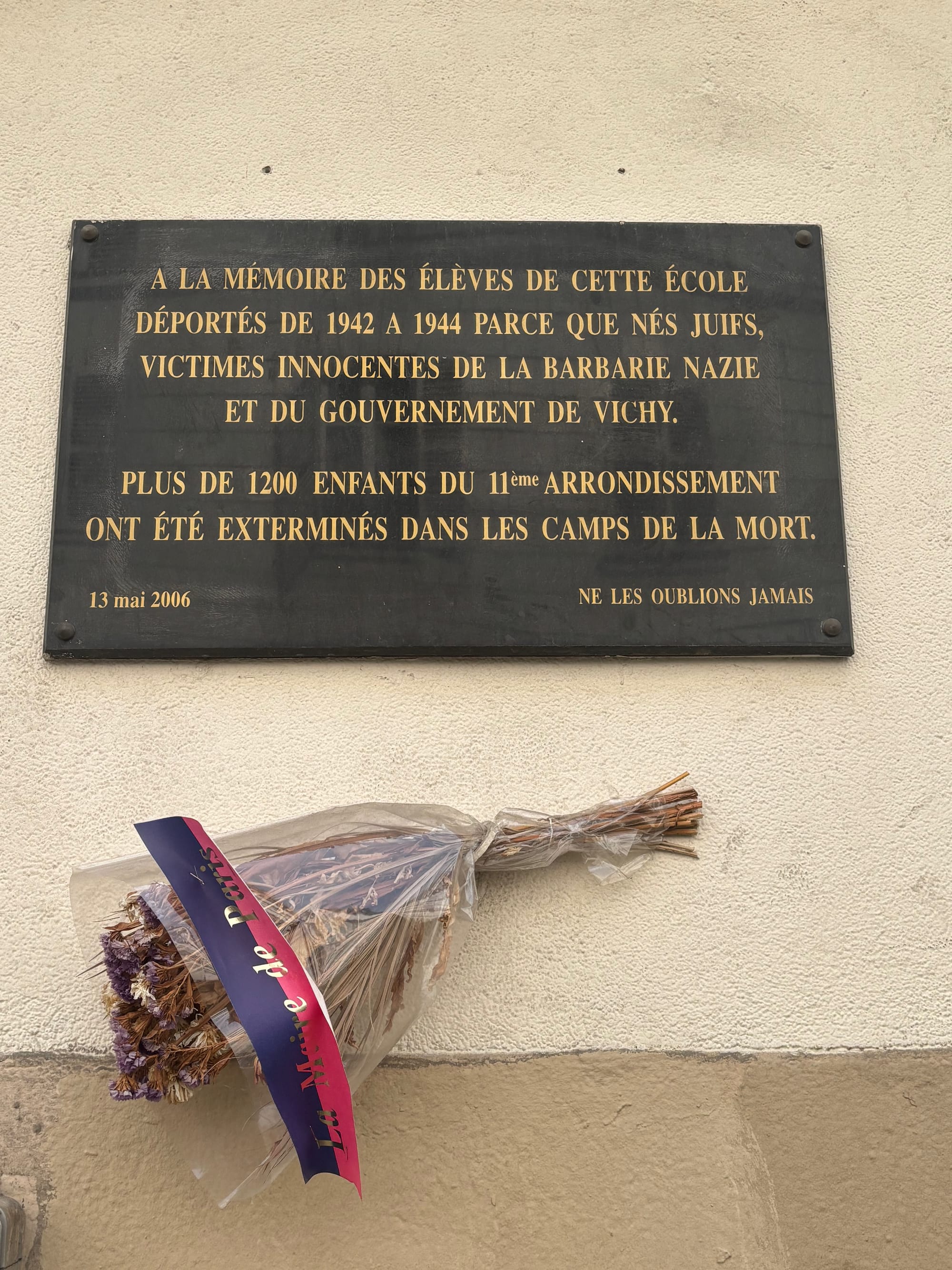
As someone born and raised in the US, WWII was definitely an important part of my historical education, but the war itself--its horrors and its causes--always seemed distant and intangible to me because it happened "over there." Thus, every time I've traveled in Europe I've been struck by the ubiquity of public signs and monuments that draw attention to traumatic or heroic events that happened during the war. I haven't gone intentionally looking for such sites of memory, but I've just kept stumbling upon them walking around Paris and now Strasbourg. The plaque below graced the entrance of a school just a few blocks from our Airbnb in Paris.
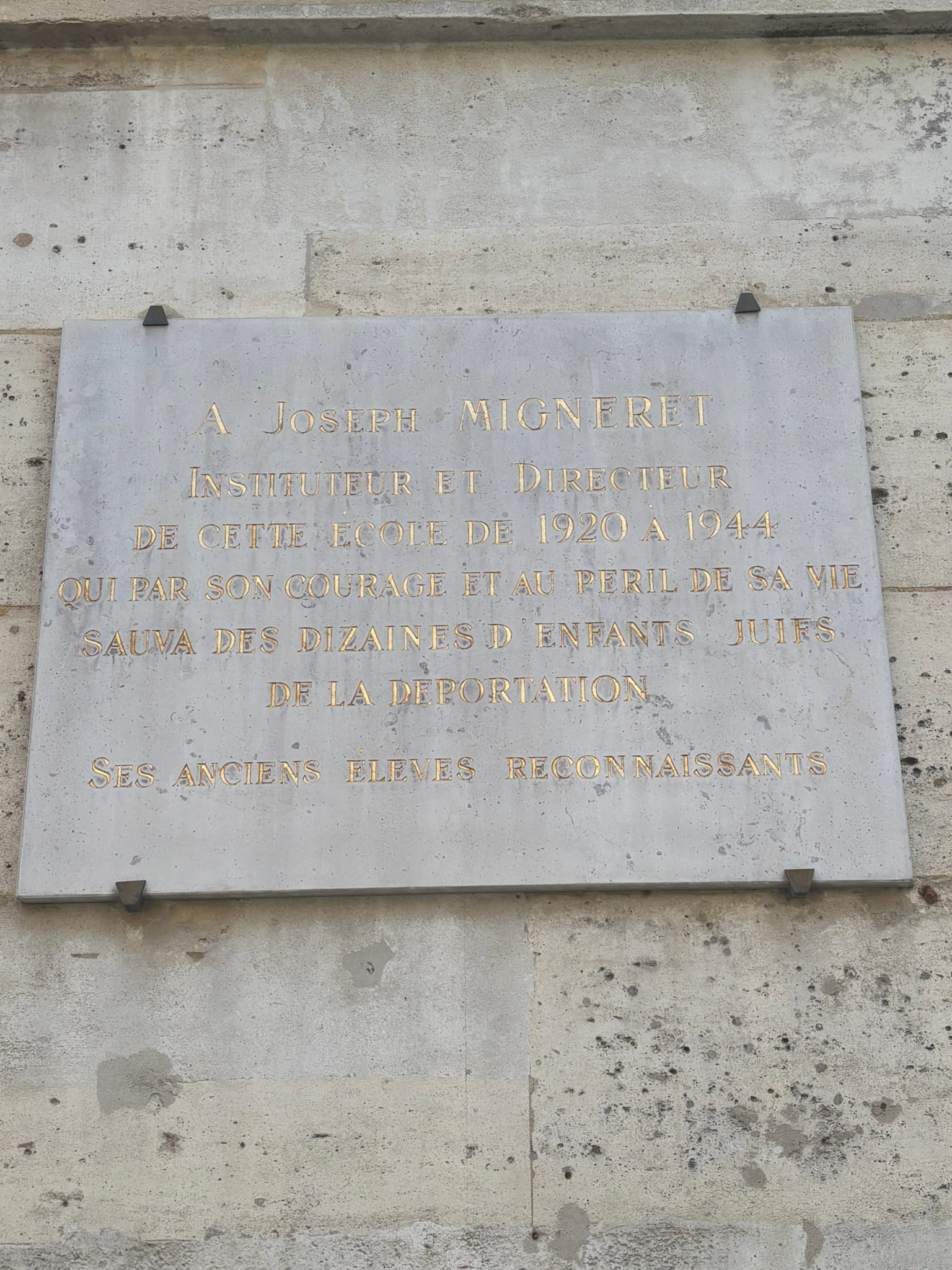
There really is no equivalent to this sort of public memorializing of right wing atrocities in the US. There's the Whitney Plantation dedicated to the history of slavery. There's the National Memorial for Peace and Justice in Montgomery, AL that memorializes the thousands of people who were lynched. For the most part, though, one has to intentionally go to these places to learn about the history of white supremacist violence and exploitation. If one considers former plantations (many of which are now sites for weddings and other celebratory gatherings) and the hundreds of Confederate monuments scattered around the south as memorials to enslavers and white supremacists, one might say that America's public memory-scape in regard to white supremacist illiberalism is far more "bothsides-y" than Europe's memory-scape in regard to WWII. Oregon, for example, was such a hotbed of KKK activity in the 1920s that the 1923 Oregon legislative session was known as the Klan session because the majority of members were either Klan members or were sympathetic to it. To my knowledge, Oregon has no public signs or memorials that mark this chapter in the state's history.
To give another example, in 1923 the mayor of Johnstown, PA ordered every non-white person to move out of the city within a week or get arrested. Over 2000 families complied out of fear for their lives. I grew up and went to K-12 public school right near there. My grandparents lived in the area in 1923. Not once did anyone ever mention this dramatic event, basically a racial pogrom, that occurred only two generations earlier. I only learned about it after I finished my PhD in US History. It's still largely memory-holed in the area. Imagine the outraged response if some public figure in MAGA-fied Cambria County proposed putting up a plaque commemorating that local moment of "mass deportations" and honoring the progressive groups like the NAACP who protested against such blatant racism.
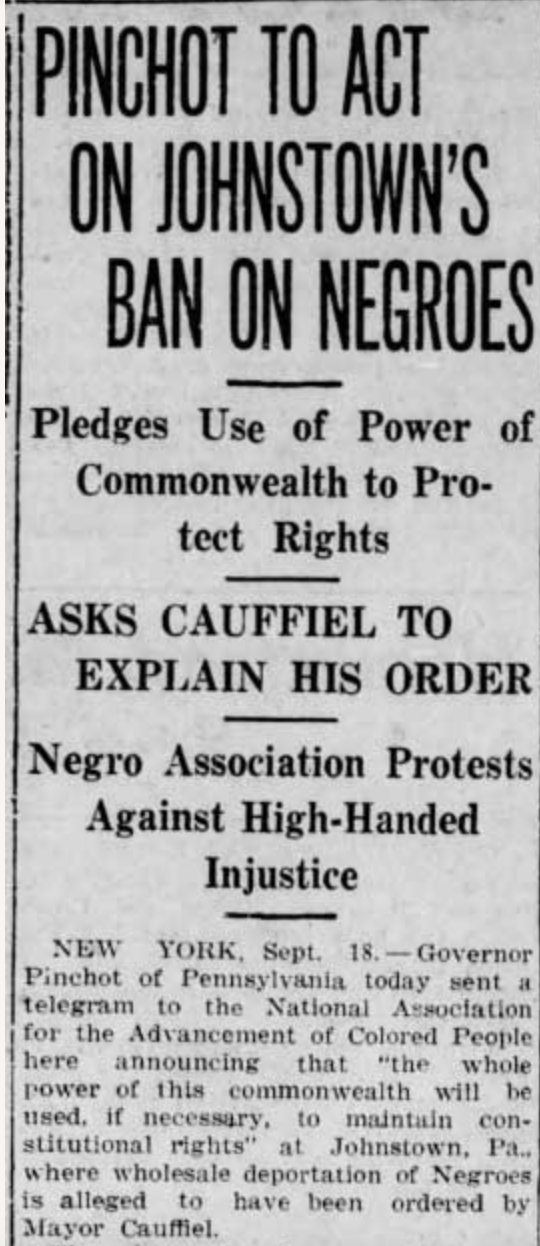
As I wrote about in the piece linked below, the memory culture into which I was socialized as a young white American had an enormous blind spot for the history of white supremacy and the American far right, and I think this played at least some role in creating the conditions in which the GOP could move so far right so rapidly over the past couple decades, yet still be perceived as a "normal American political party."
 Seth Cotlar
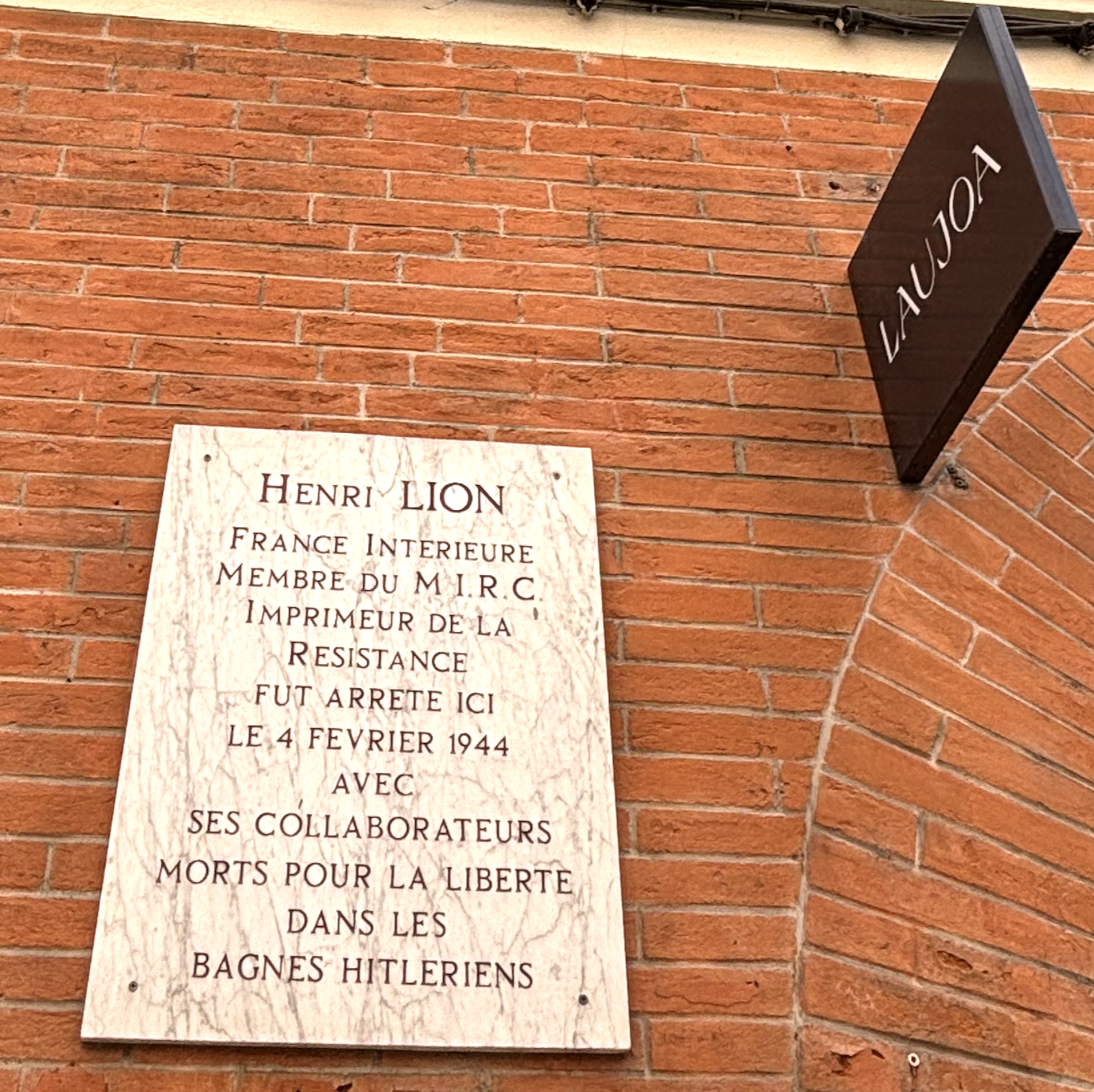
By no means would I say that France's memory culture around the history of fascism has been perfect or served as an effective bulwark against that nation's rising far right, but it is notable to me that all of the public commemorations of the WWII era I've seen take for granted that the heroes were the anti-fascists and the villains were the fascists. When traveling in Toulouse two years ago, for example, we noticed dozens of buildings like the one below with plaques honoring the antifascist resistance fighters who'd lived there.
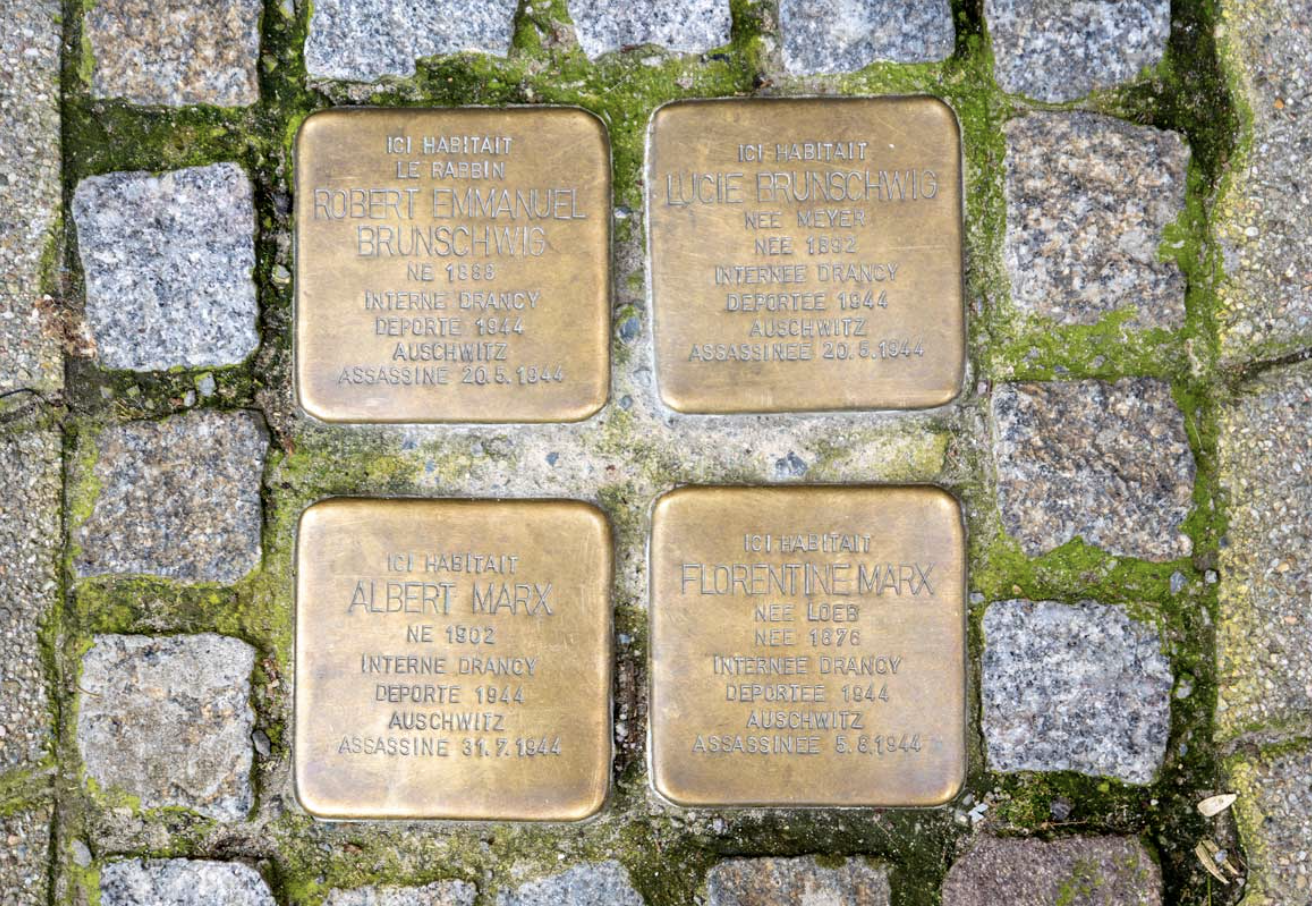
And in Strasbourg, as in Berlin and other cities in Germany, one can find scores of stolperstein on the sidewalks marking the former homes of Jews who'd been murdered in the Holocaust.
The students and I got a tour of downtown Strasbourg from a local guide who took us through the city museum. When we got to the section of the museum that discussed the Nazi occupation, she mentioned that her grandfather's parents had been murdered by the Nazis. While relations between French and German people here along the Rhine are quite amicable these days, she told us that her grandfather, until the day he died, refused to shake hands with Germans.
A few days ago I went to the market at Place Broglie in the center of the city to buy food for the week. It was a lovely experience. Today I was looking through pictures of Strasbourg from the days of the Nazi occupation and learned that in the 1940s the Nazis had renamed Place Broglie "Adolf Hitler Platz."
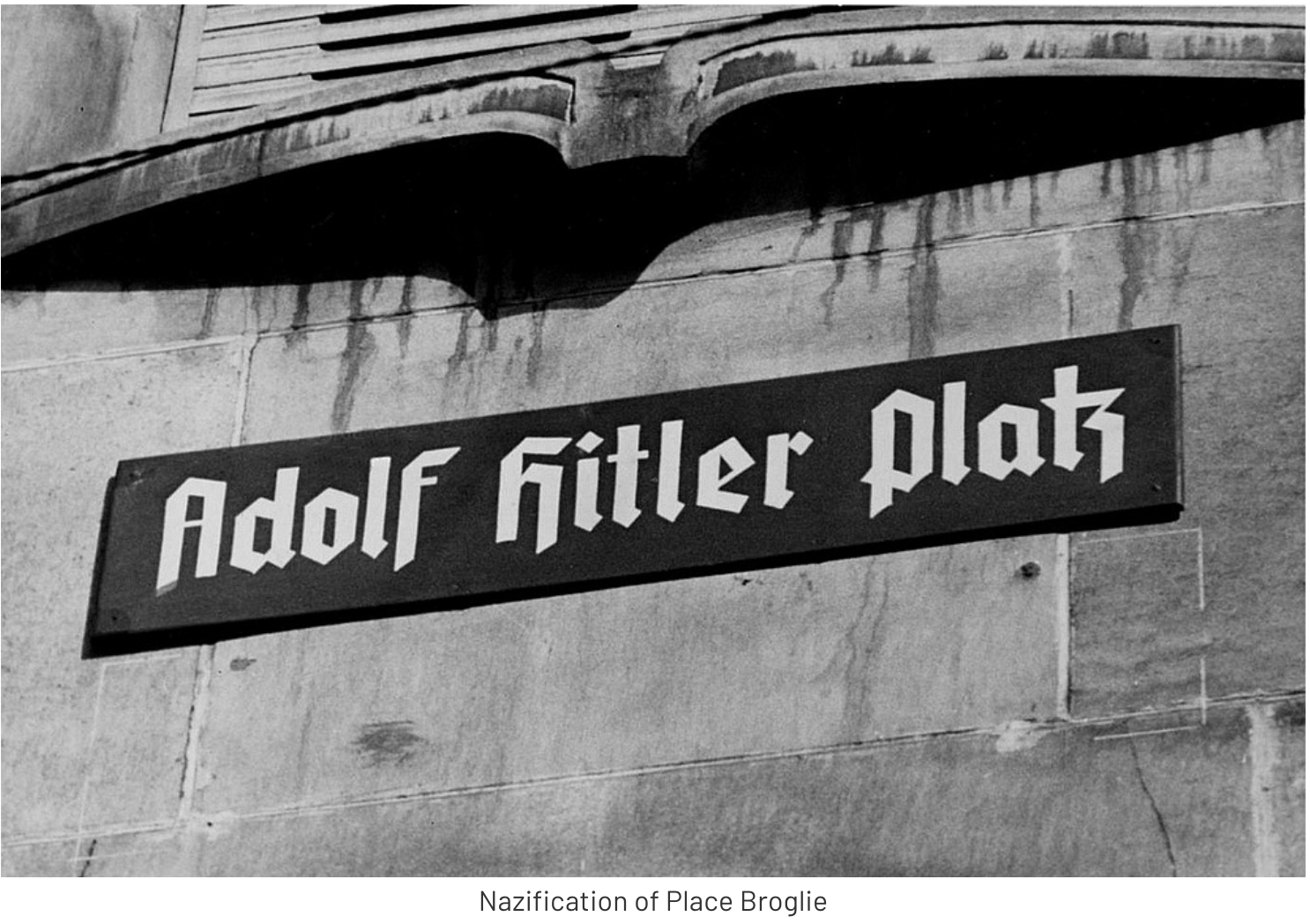
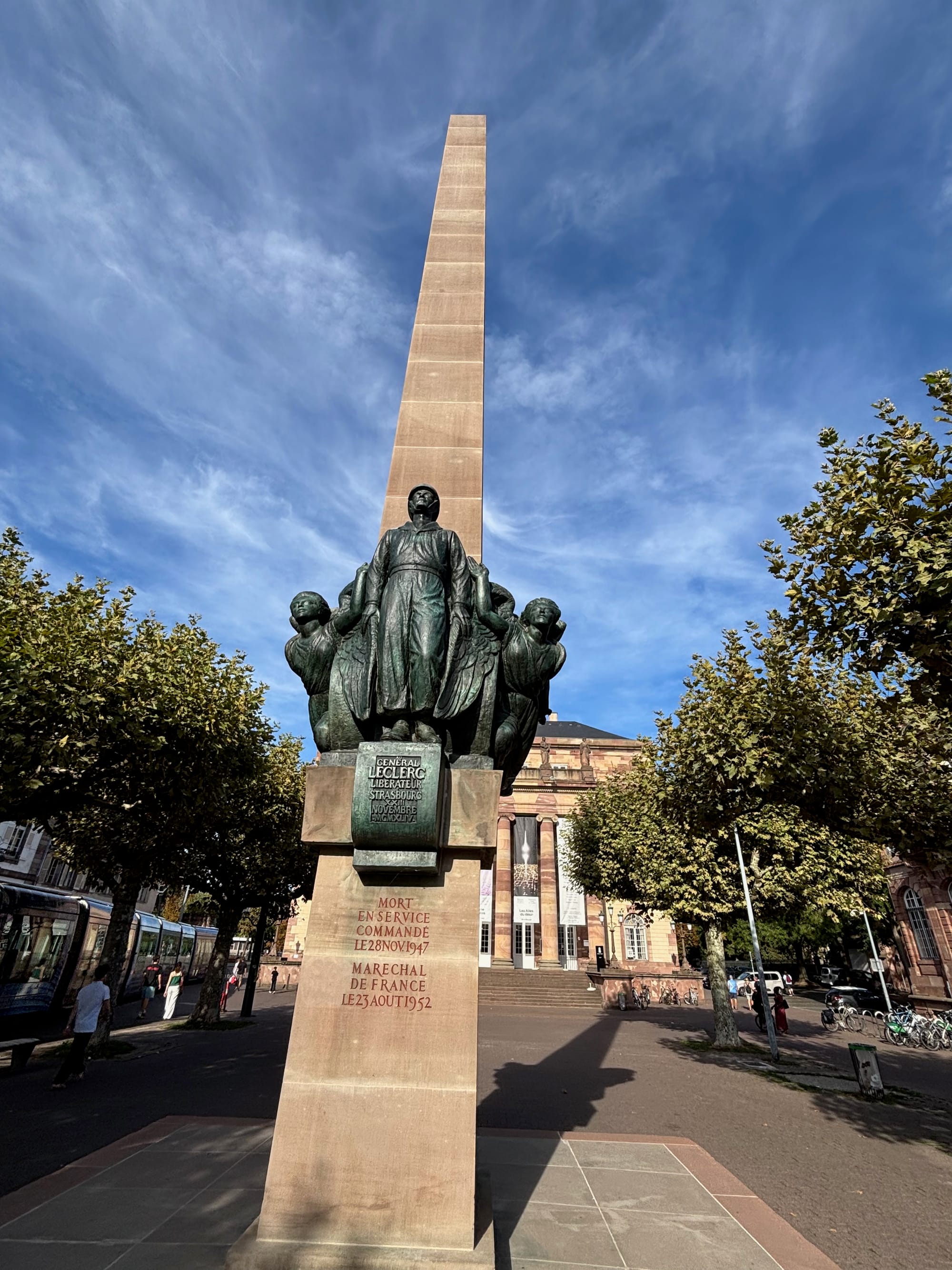
After the war, the Place Broglie was quickly reclaimed from its temporary status of "Adolf Hitler Platz" by the erection of a large statue to General Leclerc, the liberator of Strasbourg.
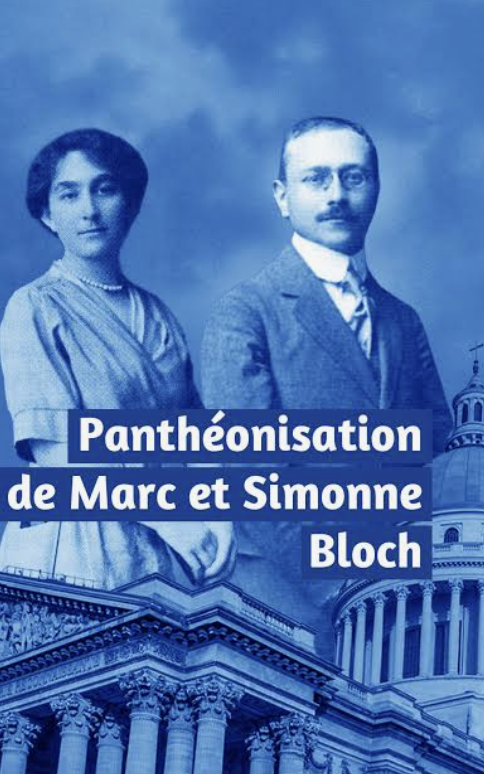
Today when one walks through Place Broglie, one sees two huge posters on a city building announcing an academic presentation about the pantheonization of Simonne and Marc Bloch, Jewish historians from Strasbourg who joined the resistance. Marc was executed by the Nazis in 1944, only a couple weeks before Simonne died under an assumed name in a hospital nearby.

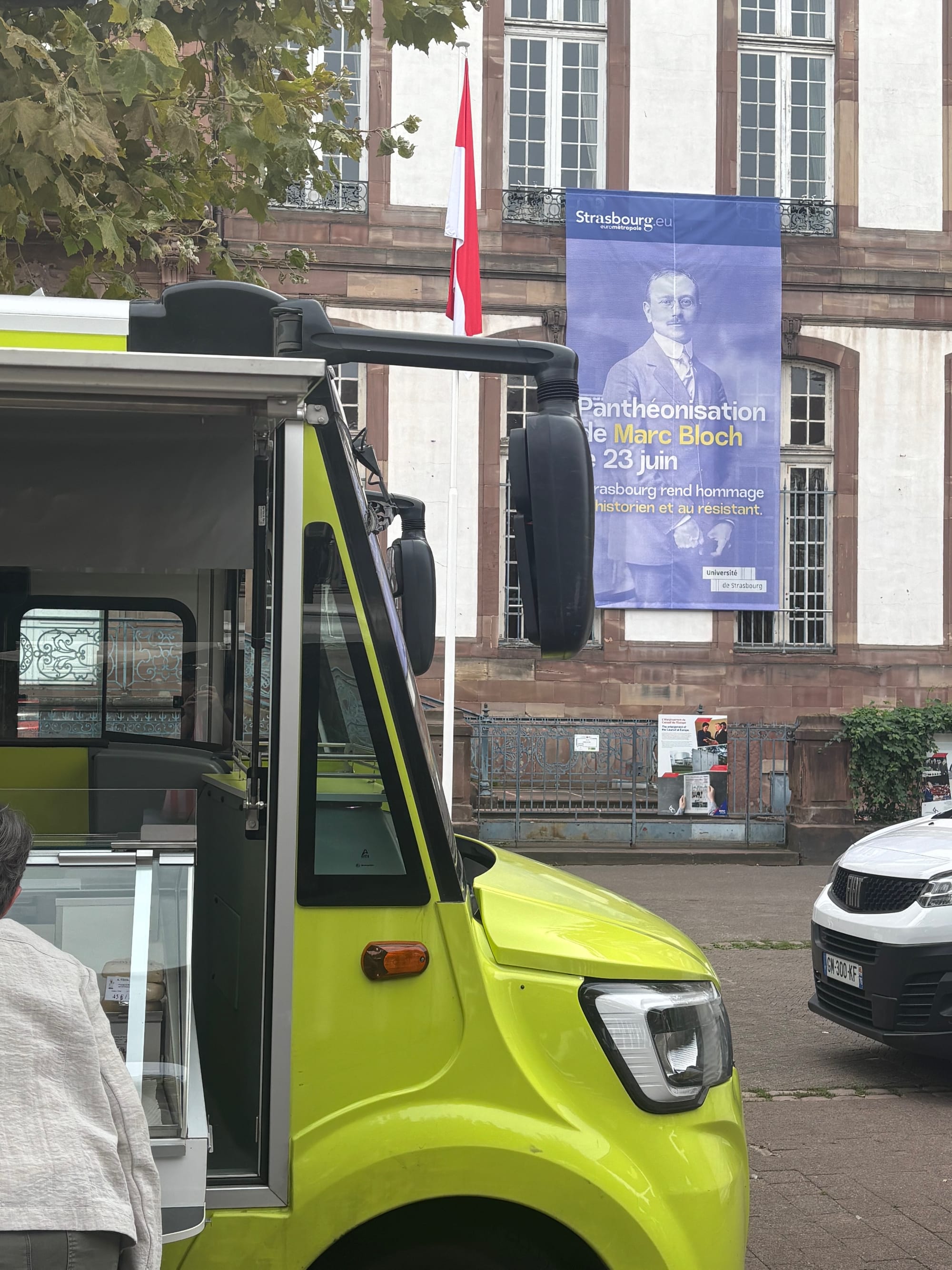
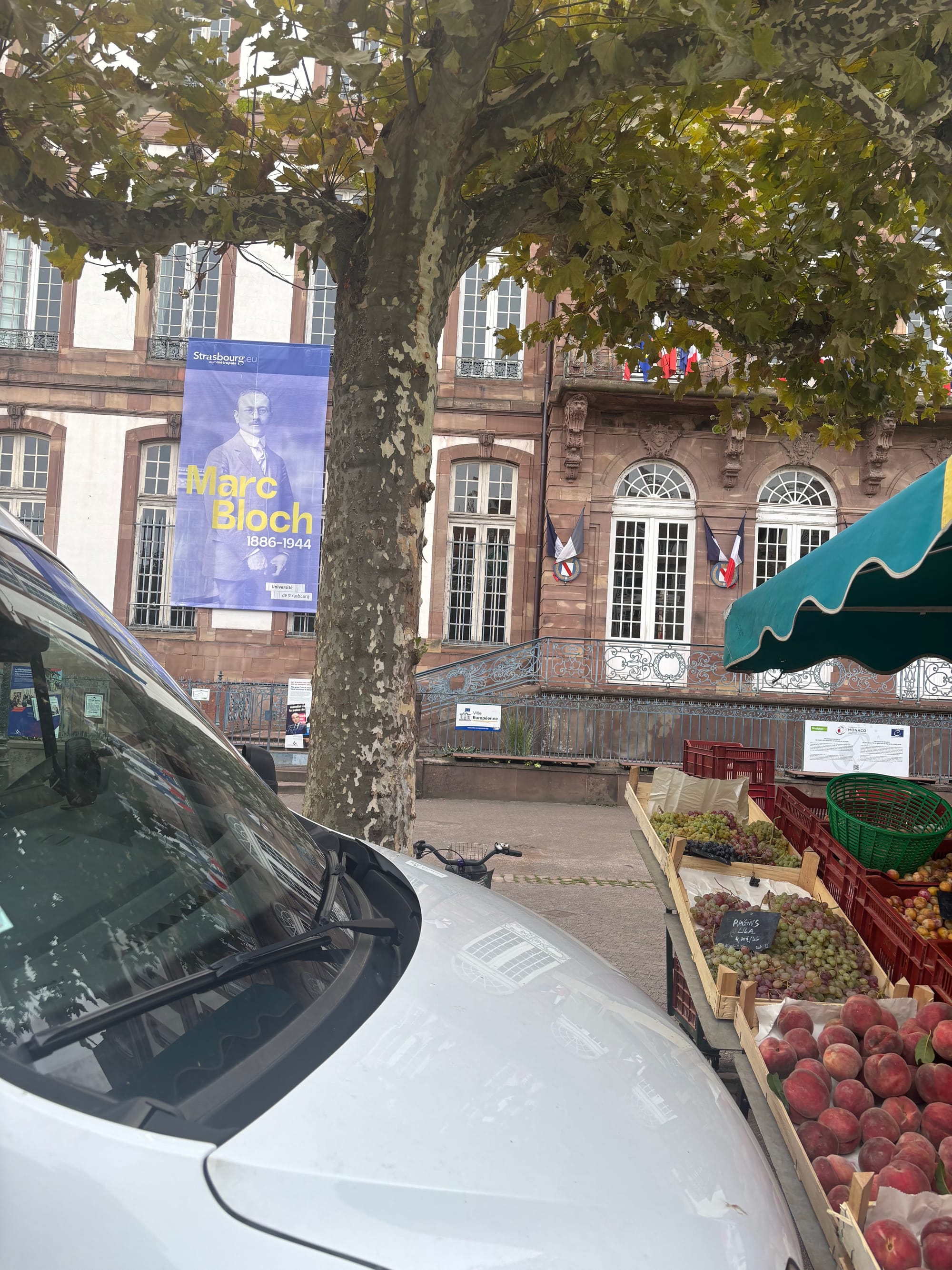
The bottom two photos were taken today at the market at Place Broglie (formerly Adolf Hitler Platz).
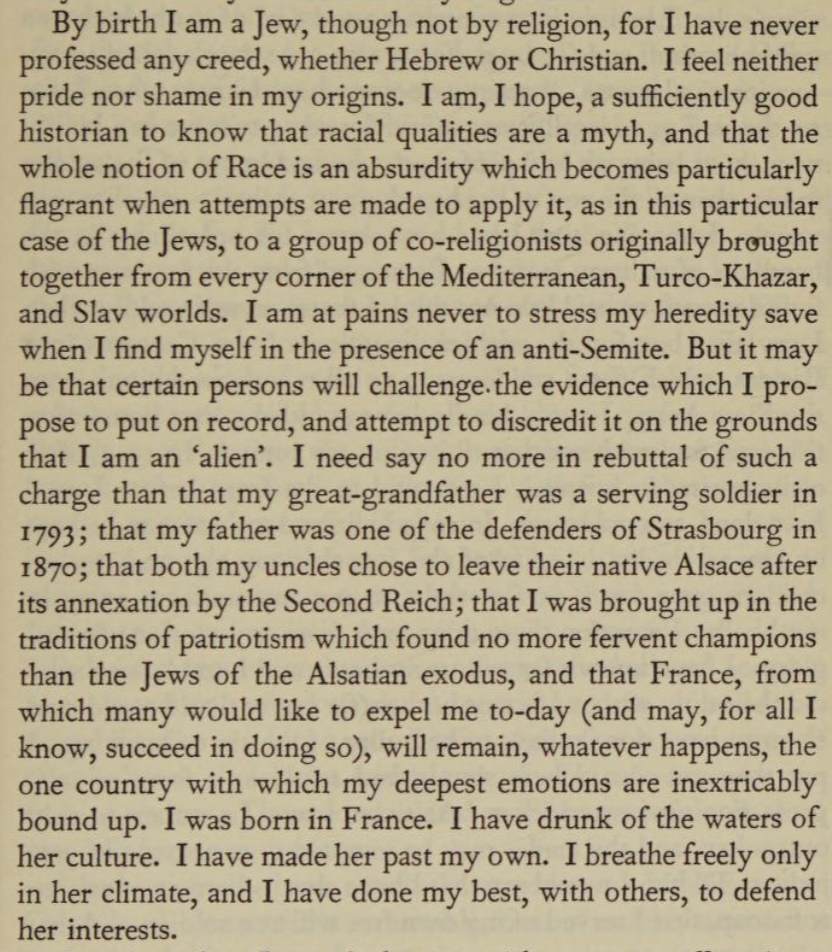
In 1940 Marc Bloch wrote a book entitled Strange Defeat that tried to make sense of why the French elite succumbed so seemingly easily to the Nazis' fascist takeover. This moving passage about Bloch's understanding of his "Frenchness" has gone through my mind more than a few times while walking the streets of Strasbourg in these days of rising religious and ethno-nationalism across Europe and the US.
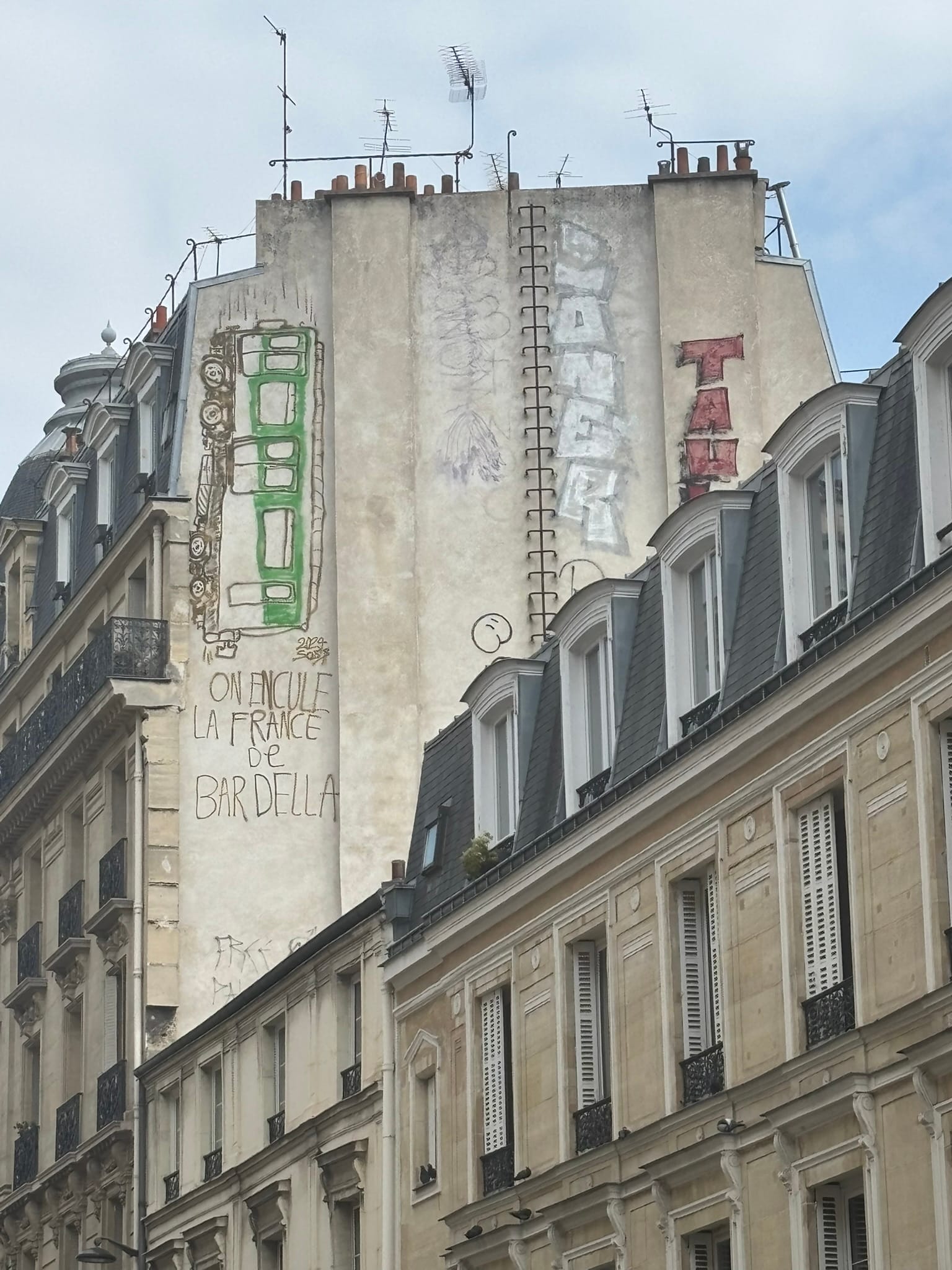
I think Marc Bloch would appreciate that one of the first things I laid my eyes on the first morning I was in Paris was this graffiti looming above the coffee shop I wandered into in my jet lagged haze. "On encule la France de Bardella" translates politely as "Fuck Bardella's France," Jordan Bardella being a leader in France's Islamophobic and anti-immigrant, Far Right National Rally party that descends from the Nazi collaborators of the WWII era.
After the Allies and the French Resistance liberated Strasbourg and evicted the Nazis from the Château de Pourtalès, the building's next chapter involved playing host to a US State Department organized and CIA-funded psychological operation that trained dissident exiles from Iron Curtain countries in the principles of American-style democracy...with perhaps a side helping of anti-communist insurgency. Hundreds of young people from Eastern and Central Europe attended "The Free Europe College (Collège de l’Europe libre)" at the Château de Pourtalès between 1951 and 1958. The program was run by the Allen Dulles-founded National Committee for a Free Europe, the same organization behind Radio Free Europe.
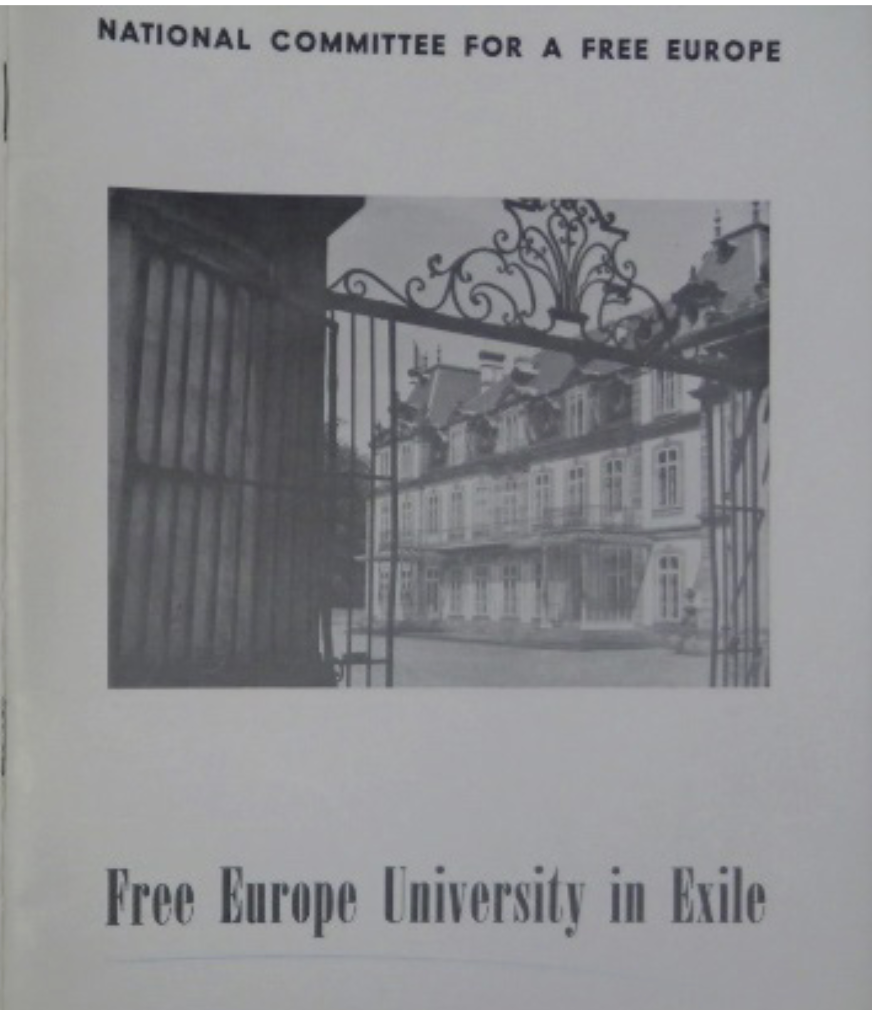
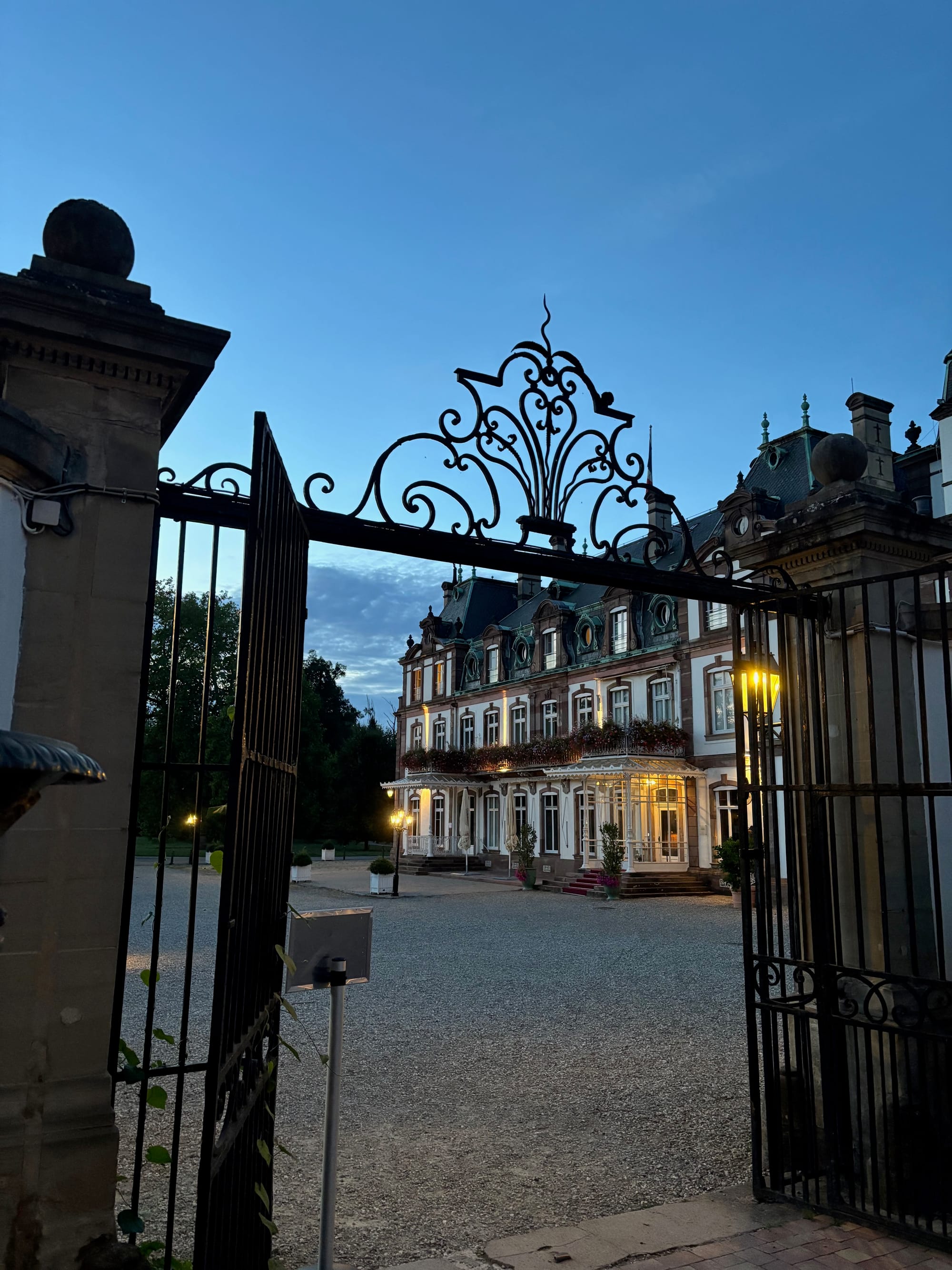
Left: The brochure for the program at the Château de Pourtalès, 1951. Right: The Chateau in September 2026
Here's the rationale for the short-lived project as articulated by one of its proponents in 1951.
“This college has a three-fold programme: to make it possible for the youth of the satellite countries to continue their studies, and thus to develop for those countries future leaders who are educated in the spirit of Western freedom; to maintain and safeguard in these young people the links which attach them to the culture and the language of their home countries; and, thirdly, to develop, by means of communal life and special studies, a mutual understanding between these representatives of different nationalities and to form in them a supra-nationalist and European spirit.”
I've just recently learned about this Free Europe University project thanks to the work of historian Veronika Durin-Hornyik who wrote a French PhD dissertation on the subject. This article she wrote in English nicely captures the various tensions and contradictions that dogged this simultaneously nationalist and "supra-nationalist" Cold War project throughout its existence. Many of the Europeans invested in the project were understandably skeptical about the intentions of the Americans. To what extent were they being used as pawns in America's geopolitical game? Meanwhile, many of the Americans harbored suspicious about the various "bohemian" and perhaps a bit too leftish Europeans they found themselves working with. You mean these Czech, Bulgarian, Hungarian, Polish, etc. intellectuals won't reflexively see us Americans as beneficent liberators inculcating them into the universal "truths" of American-style, capitalist democracy that these backward people had somehow failed to understand, thus requiring us to come bail them out?
A key turning point in the Free University in Exile's history came in 1956 with the Soviets' brutal suppression of the Hungarian revolution. Up until that point there seemed to be a strategic fuzziness about the Free University's purpose--it was an academic institution intended to train future leaders of a liberal, democratic, post-Soviet Eastern and Central Europe, but many of the Americans who backed the project hoped their disciples might use weapons a bit more lethal than their voices or their pens to bring about the end of Communism in their home countries. Once it became clear just how savagely the Soviets were willing to put down any popular resistance to their rule, bringing a few hundred exiles from the "captive nations" to a Chateau in France for a year of lectures and seminars led by American professors seemed unlikely to make much of a dent in the Iron Curtain.
Another problem endemic to this project of recruiting "anti-communist nationalists" from Central and Eastern European countries is that a good number of people who would have called themselves "anti-communist nationalists" in the 1950s had been fascists and/or Nazi collaborators in the 1930s and 40s. There were certainly plenty of reasons for Poles or Latvians to despise Communism in the 1950s, but more than a few of them despised Communism for the same reason the Nazis did, because they thought it was part of a global Jewish conspiracy. I've previously written about two such fascist, anti-communist "freedom fighters"--Polish-American Josef Mlot-Mroz and Latvian-American Joseph Dilys.
Ross Bellant's book "Old Nazis, the New Right, and the Republican Party" documented the many former Eastern and Central European fascists who'd emigrated to the US after WWII and then become active in right wing and then Republican American politics under the seemingly innocuous banner of "anti-communism."
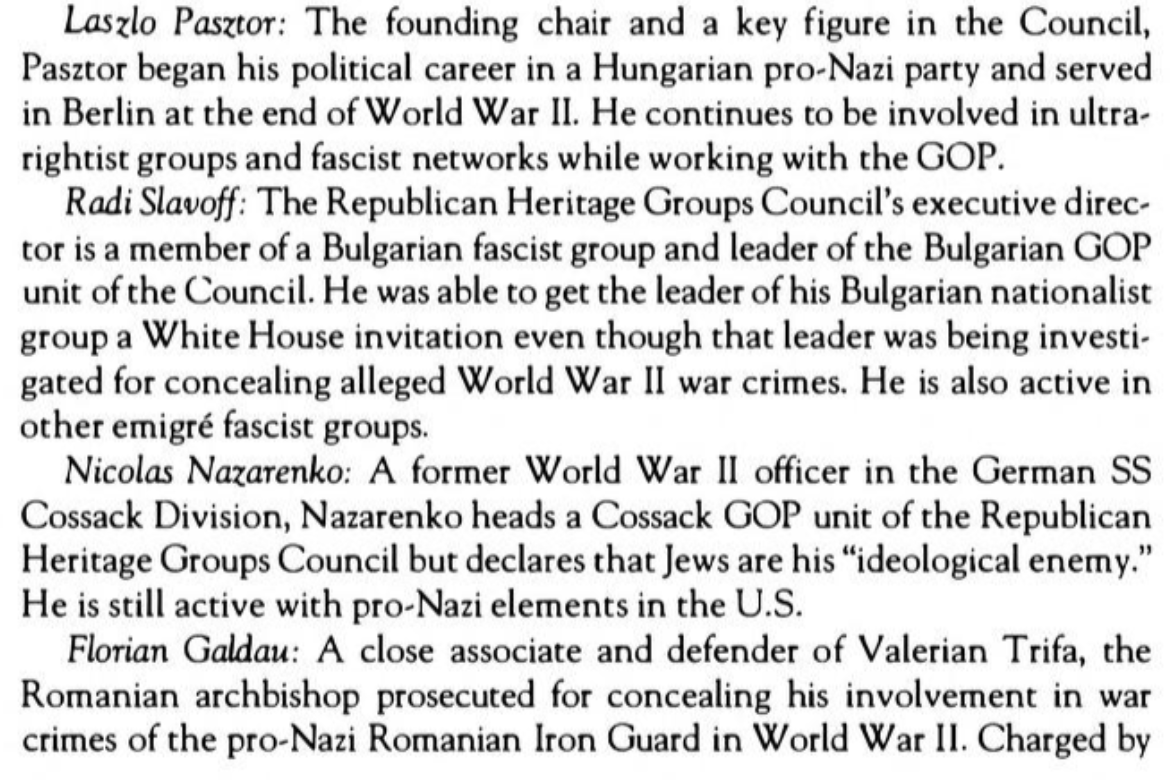
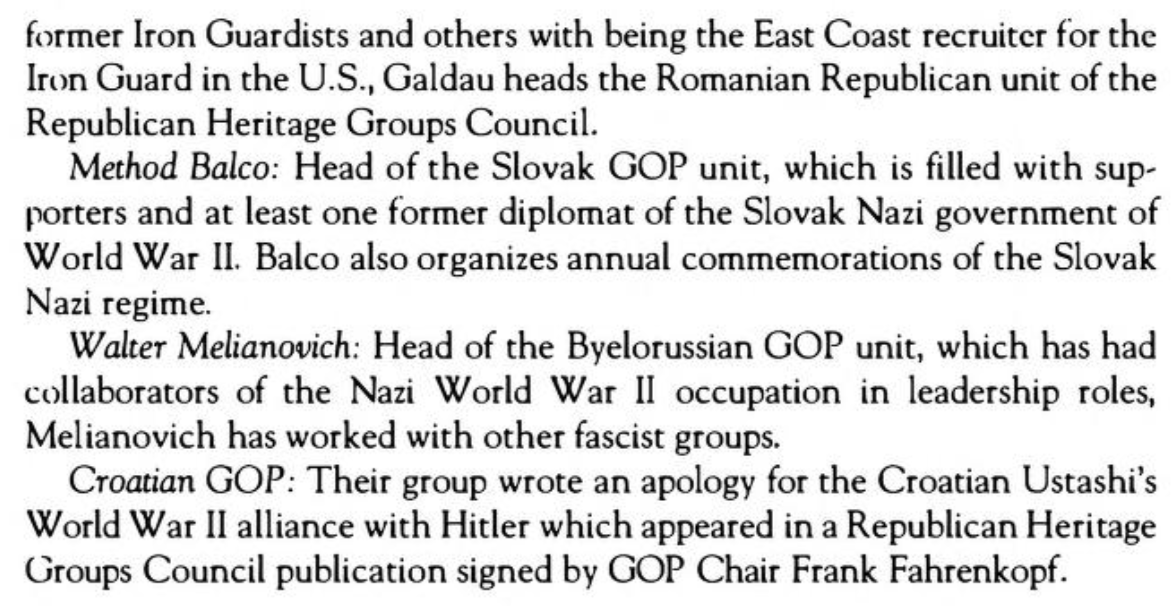
I want to emphasize that most Cold War emigres from Central and Eastern Europe were NOT fascists or anything close. Most despised Communism, but for reasons other than that they thought it was a a demonic Jewish conspiracy that sought to destroy the white race and Christianity. But given the central role that "fighting off the communist menace" has come to play in hyper-nationalist, conspiratorial Republican messaging these days--the communist menace being framed as anti-white and anti-Christian--it's perhaps obvious why this history of fascistic, anti-communist nationalism is front of mind for me these days.


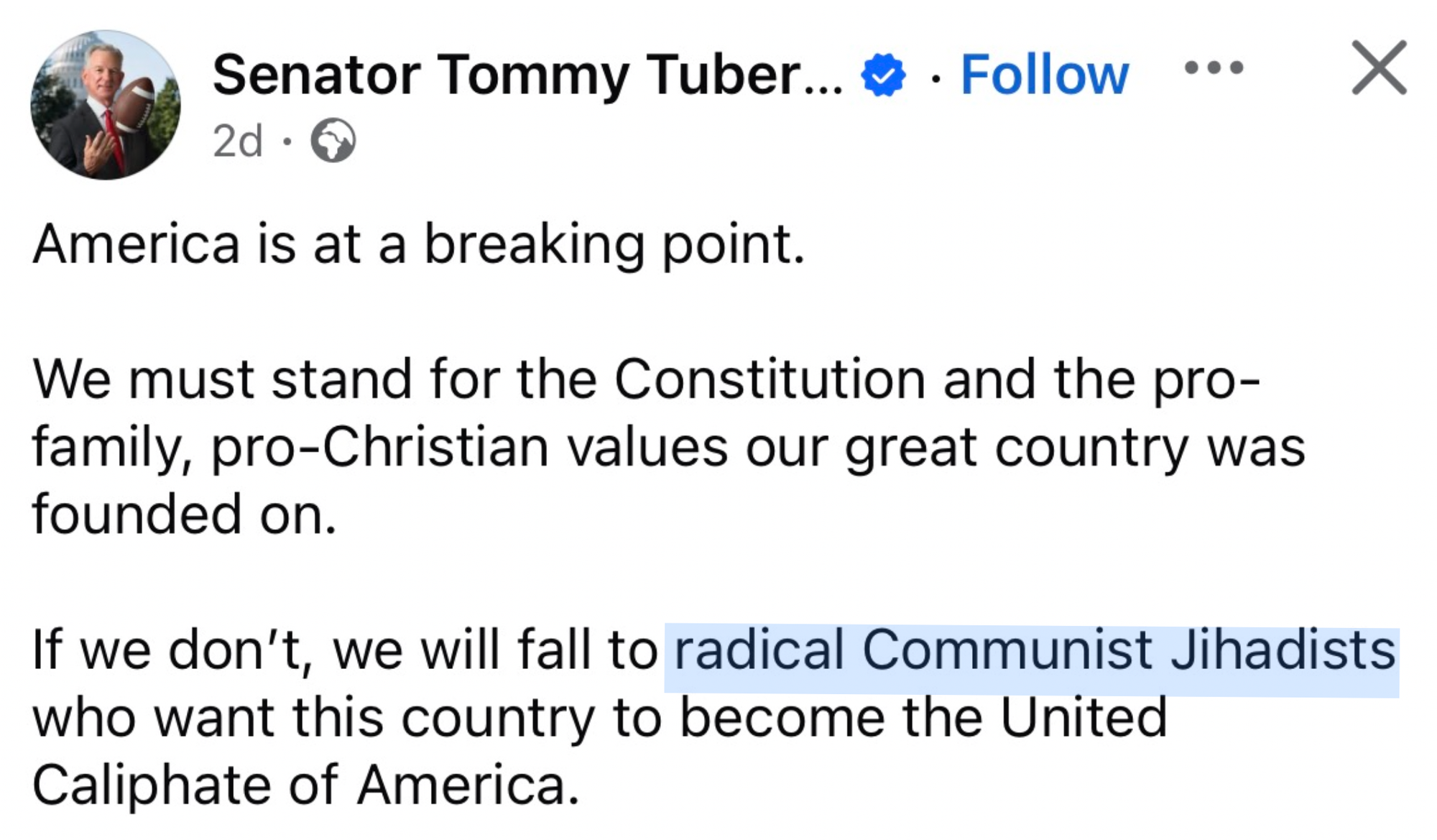
Left: A Facebook post by a longtime OR GOP activist implying that Joe Biden, a devout Catholic, was part of a Communistic plot to destroy Christianity. Center: A post from the official GOP FB page. Right:
Fast forward to today, and far right ultra-nationalist populism is flourishing across Europe, especially in many places like Hungary, Poland, or the former East Germany which were once behind the Iron Curtain. Meanwhile, here I am, an American professor who thinks liberal democracy is a good thing, but who is looking out upon a European landscape that seems increasingly unexcited about supra-nationalist liberal democracy. I'm also visiting this chateau from an America in which illiberal hyper-nationalists control all three branches of government, their party headed up by a guy who inspired a violent attack on the US Capitol a mere 5 years ago, got re-elected, and then pardoned all of the people who committed that crime against democracy. And as my friend and fellow historian Thomas Zimmer points out in this excellent piece, the pro-AfD Trump administration also sits at the head of a far-right international movement that seeks to dismantle the world's existing democracies, and the institutions and belief systems that have sustained them.
 Democracy Americana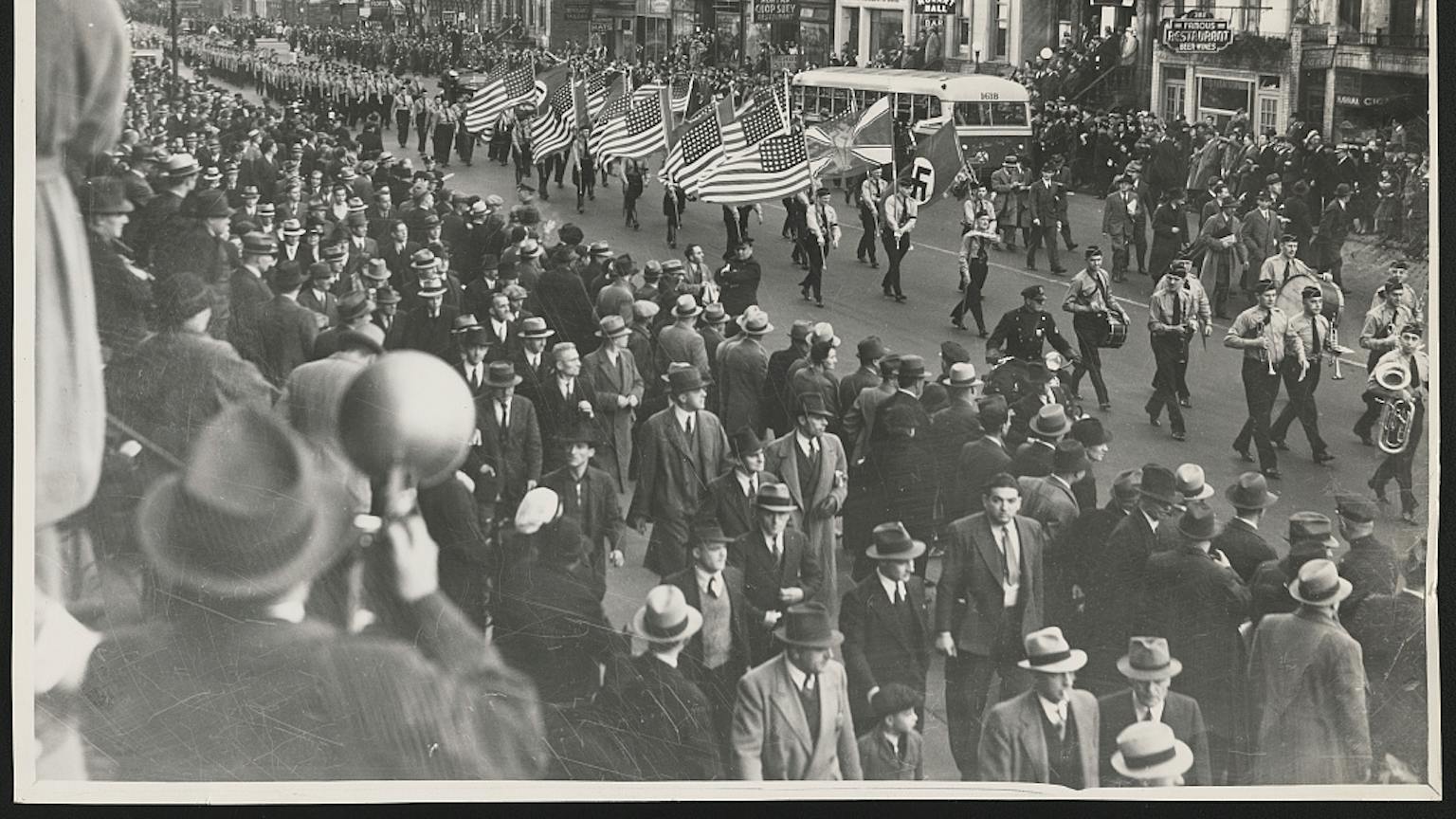
Democratic structures in countries like France, Germany, and the US are, for now, intact and still basically functioning. Far right political candidates and parties draw substantial numbers of voters in each of those places, but the far right does not represent the views and wishes of the majority in any of them. So yeah, even though I'm sleeping in a room once occupied by invading Nazi officers, I'm not worried that within the next few months AfD paramilitaries are going to overwhelm Strasbourg and reenact that history from the 1940s, forcing me to pull a Marc Bloch and join the resistance.
But when I look ahead to the fall of 2027 when a Willamette colleague of mine will be here doing the job I'm currently doing, there's a decent chance that Marine Le Pen will be the President of France, and that the AfD will have even more influence in German politics. Italy is currently governed by Georgia Meloni who cut her political teeth in the youth wing of the Italian Social Movement (MSI), a neo-fascist party founded by supporters of Benito Mussolini after World War II. The UK is experiencing almost weekly rounds of anti-immigrant violence spearheaded by people associated with far right parties that invoke Oswald Mosley's Blackshirts. Meanwhile in Sweden, the far right Social Democrats are gaining more electoral ground and getting mainstream parties to adopt their issue framing and even some of their stances.
 Martin Gelin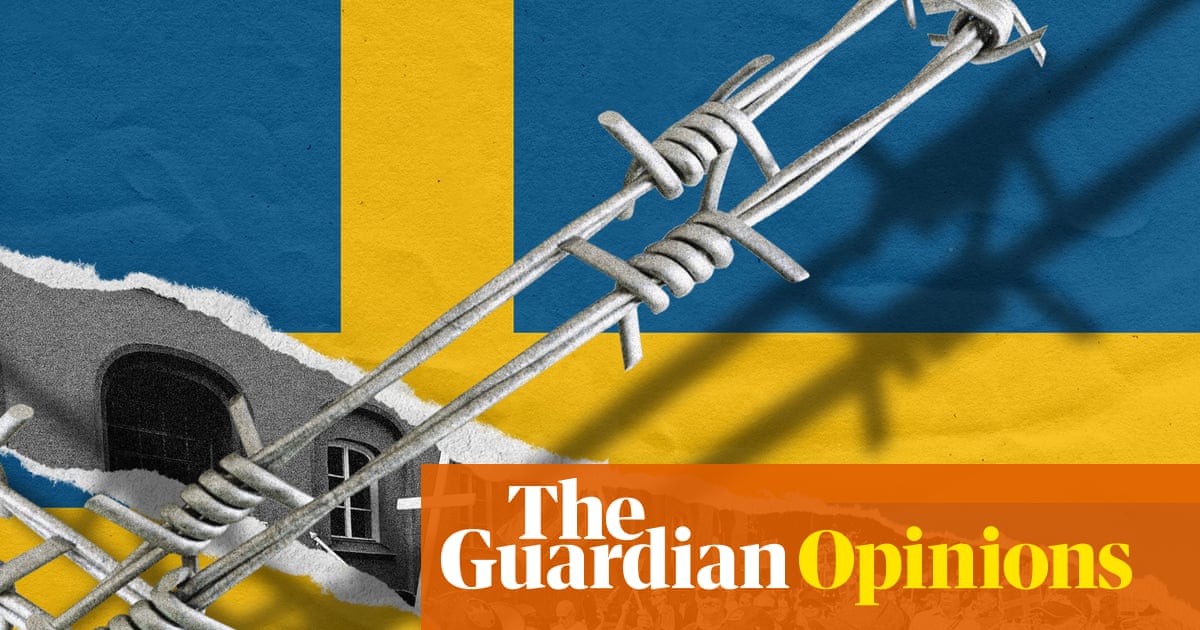
In the past few years, pro-democracy voters in Poland and Hungary have booted far right parties out of power, just as American voters did in 2020 and look likely to do this November. So there's no reason to think that liberal democracy in Europe and the US is inevitably doomed. But as I ride the tram into Strasbourg and pass stations like European Parliament and Droits de l'Homme (located at the European Court of Human Rights), those foundational institutions and ideas that underlay the post-WWII European, supra-national, democratic project feel more fragile and under assault than perhaps they ever have.
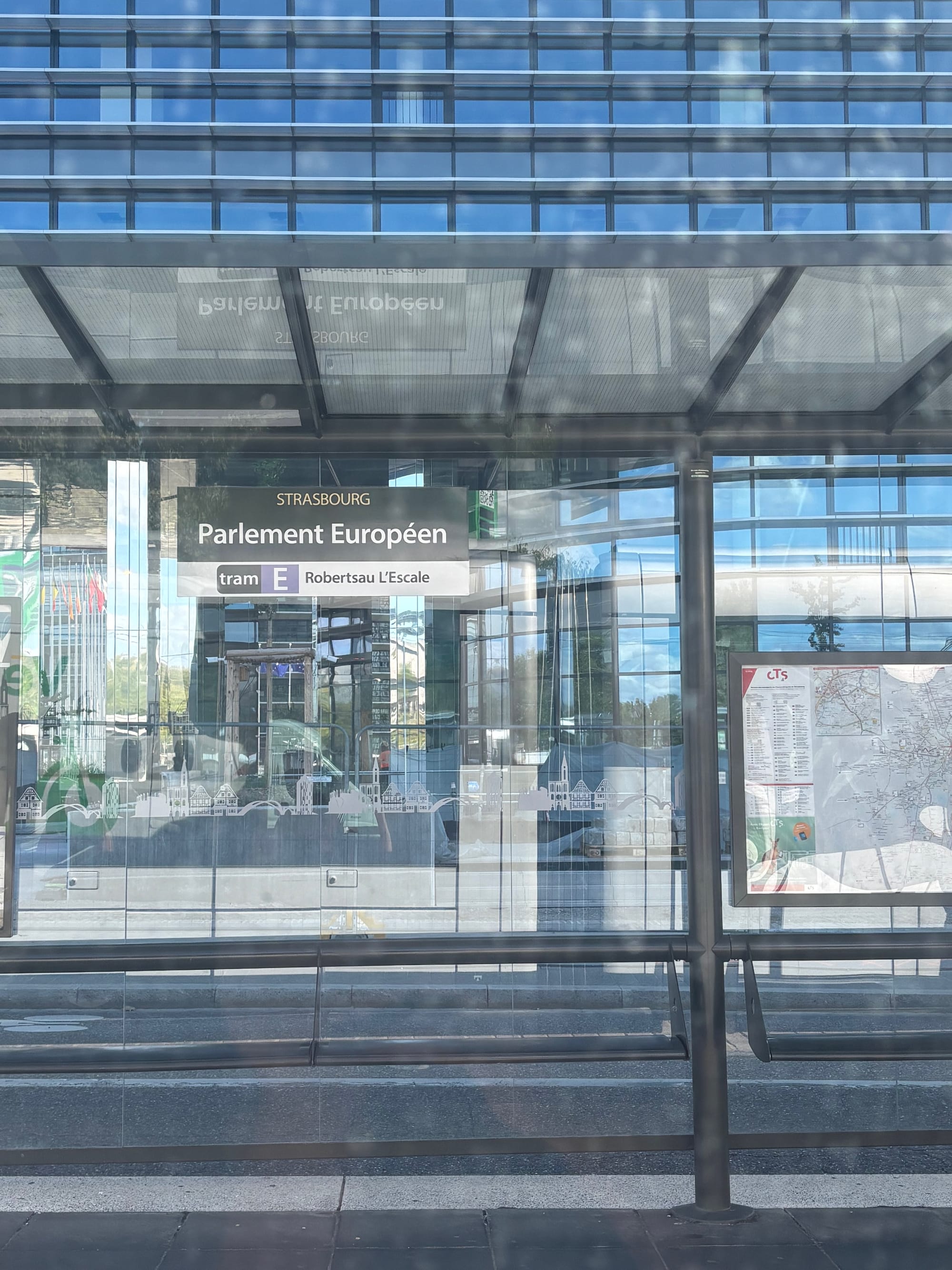
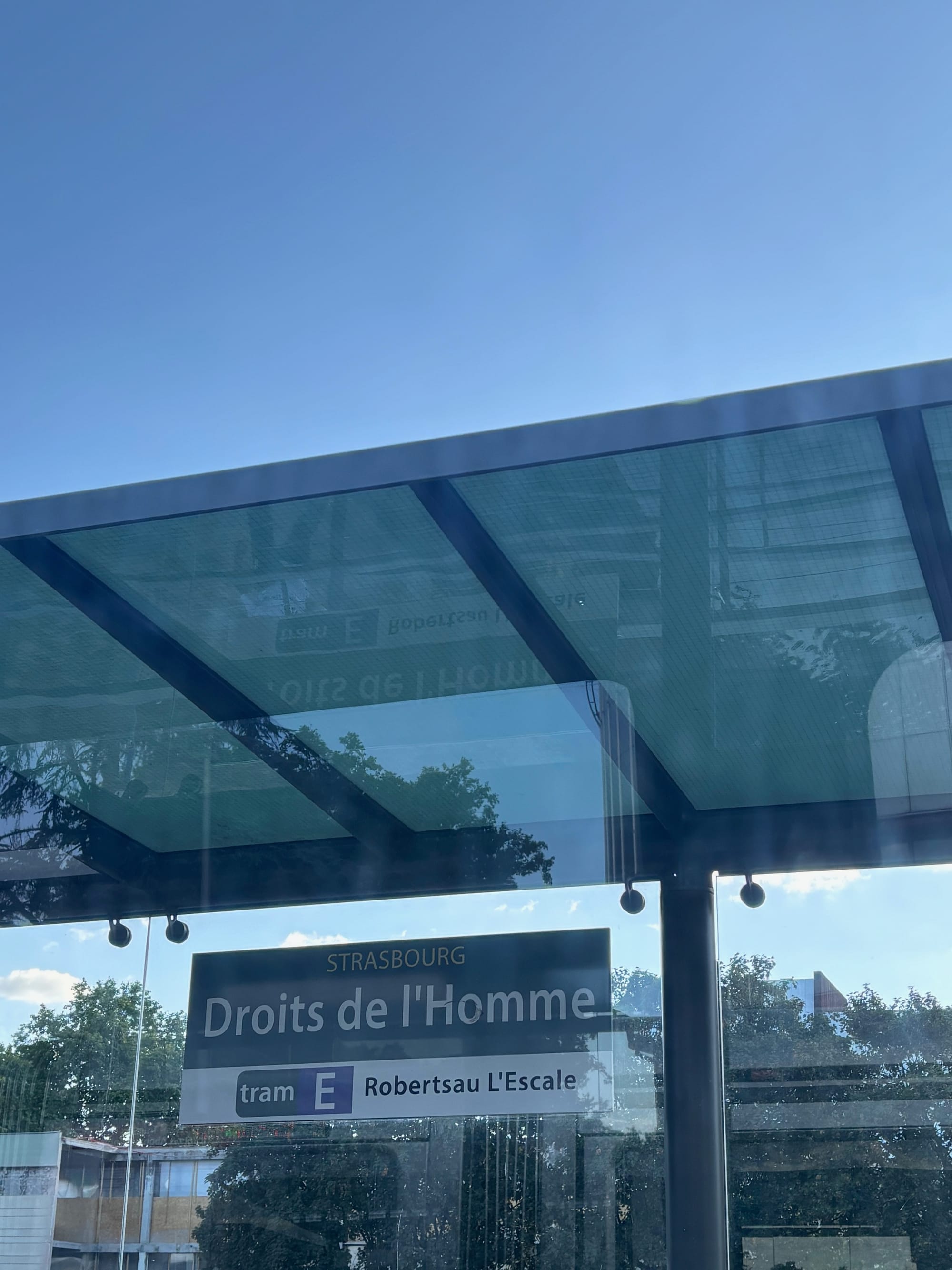
There are currently 187 (out of 720) members of the European Parliament who identify with one of three political groups that are either avowedly far right or are on friendly terms with the illiberal far right. (ESN, or Europe of Sovereign Nations; Patriots for Europe; and ECR-European Conservatives and Reformists Group)

This graphic vividly shows how the far right presence in the European Parliament has expanded dramatically since 2014, while the footprint of the left and the center-right has shrunk.
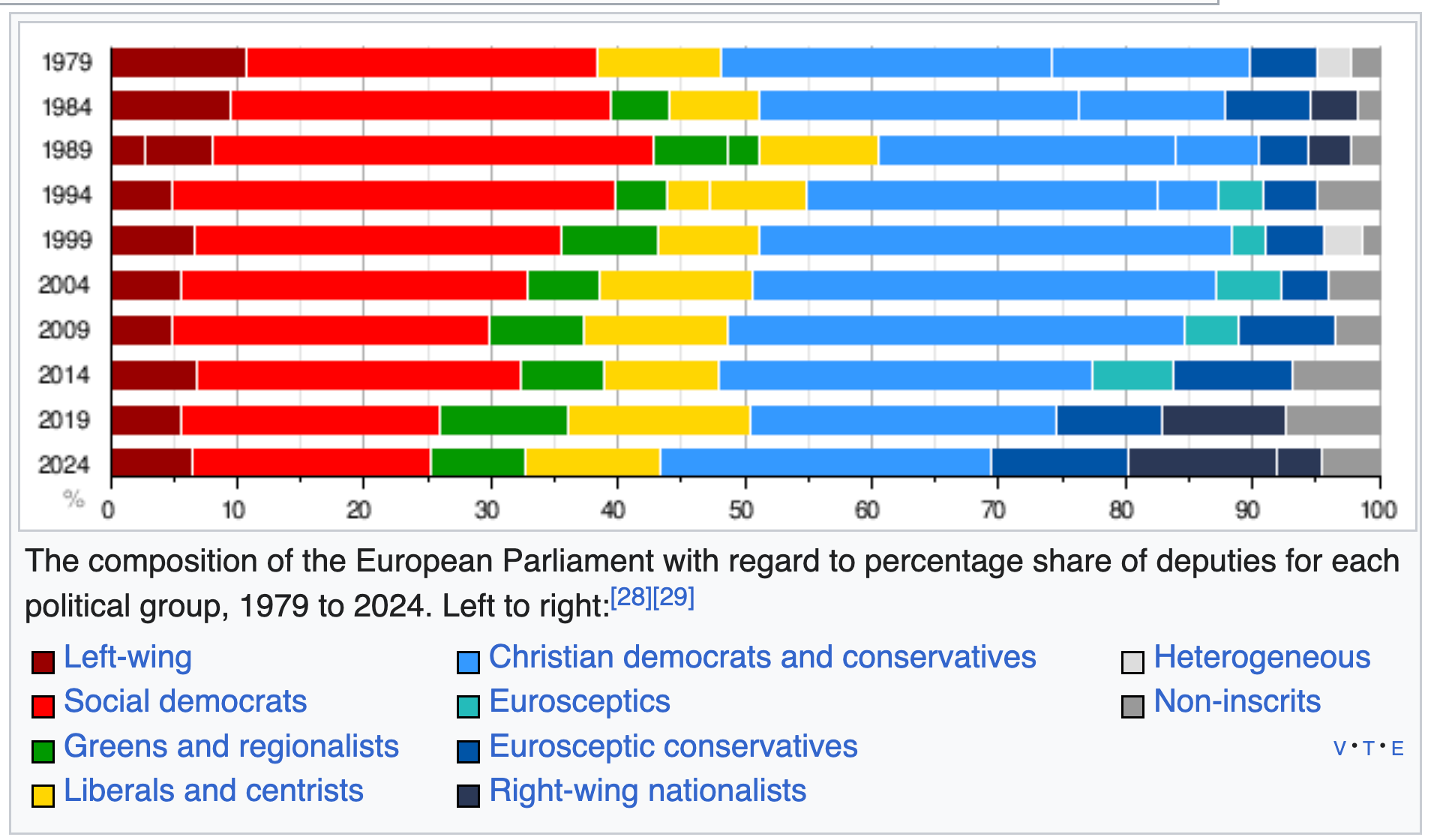
If voters across Europe continue to empower far right, illiberal, ultra-nationalist parties in their national governments and in the EU Parliament, then the future of the post-WWII, liberal/democratic European project that lay at the center of the curriculum here at the Chateau will be in great jeopardy.
To return to the central theme of this post, it feels like I'm here in Strasbourg at a very pivotal moment in the history of both European and American democracy. Things always change...every moment is to some extent "pivotal"...but some changes are far more disruptive and destructive than others.
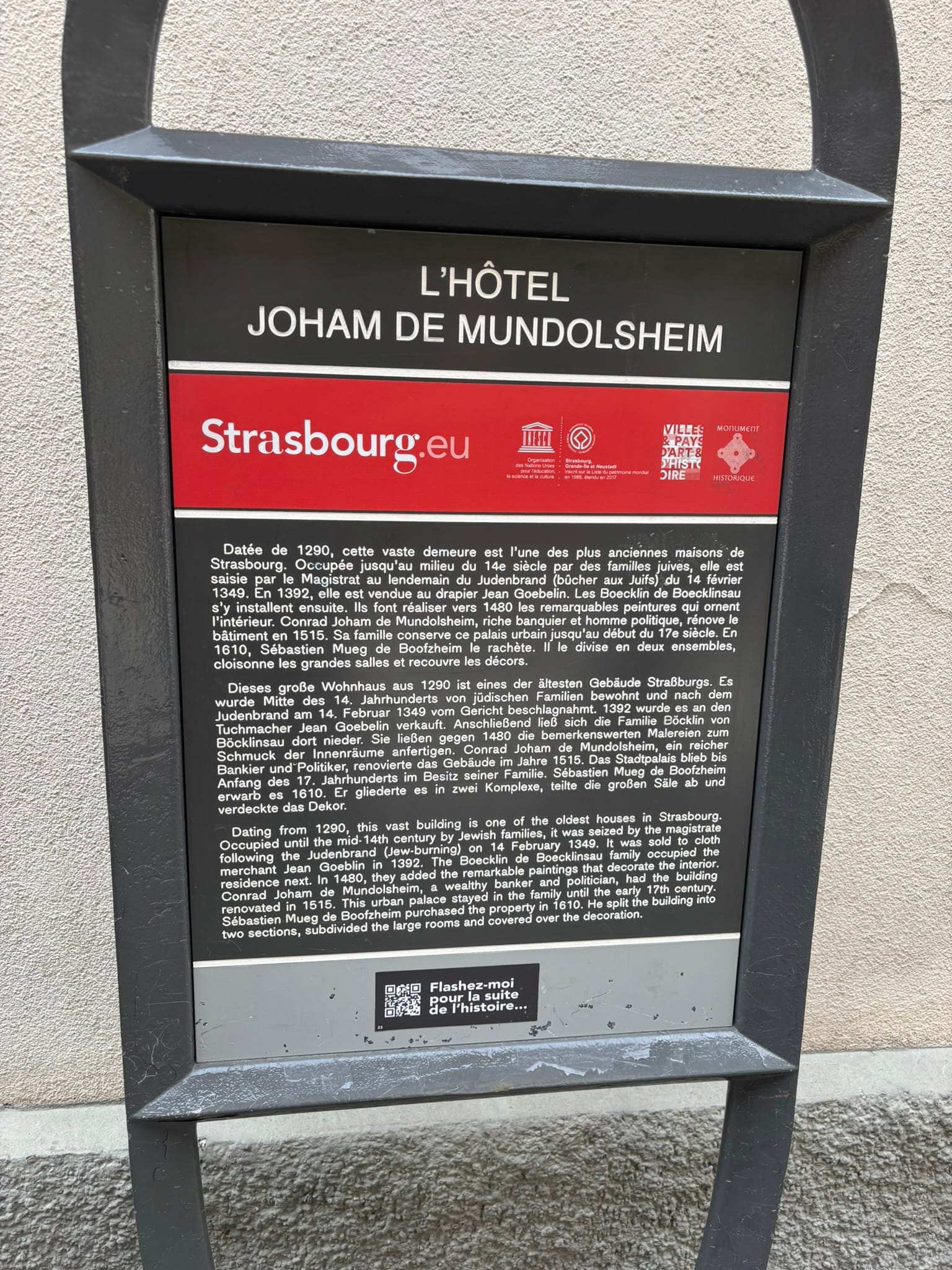
The landscape of Strasbourg offers many vivid reminders of this. One of the first street signs I stopped to read my first day in the city was this one on the Rue des Juifs (the street of the Jews). It was thanks to this sign that I learned about the "Jew Burning" of 1349 when the majority of Strasbourg's Jews were massacred. This was at the time of the Black Death, and the Jews, to whom many of Strasbourg's religious and economic elite owed money, were used as scapegoats by that elite for their supposed role in bringing the pandemic to the city.
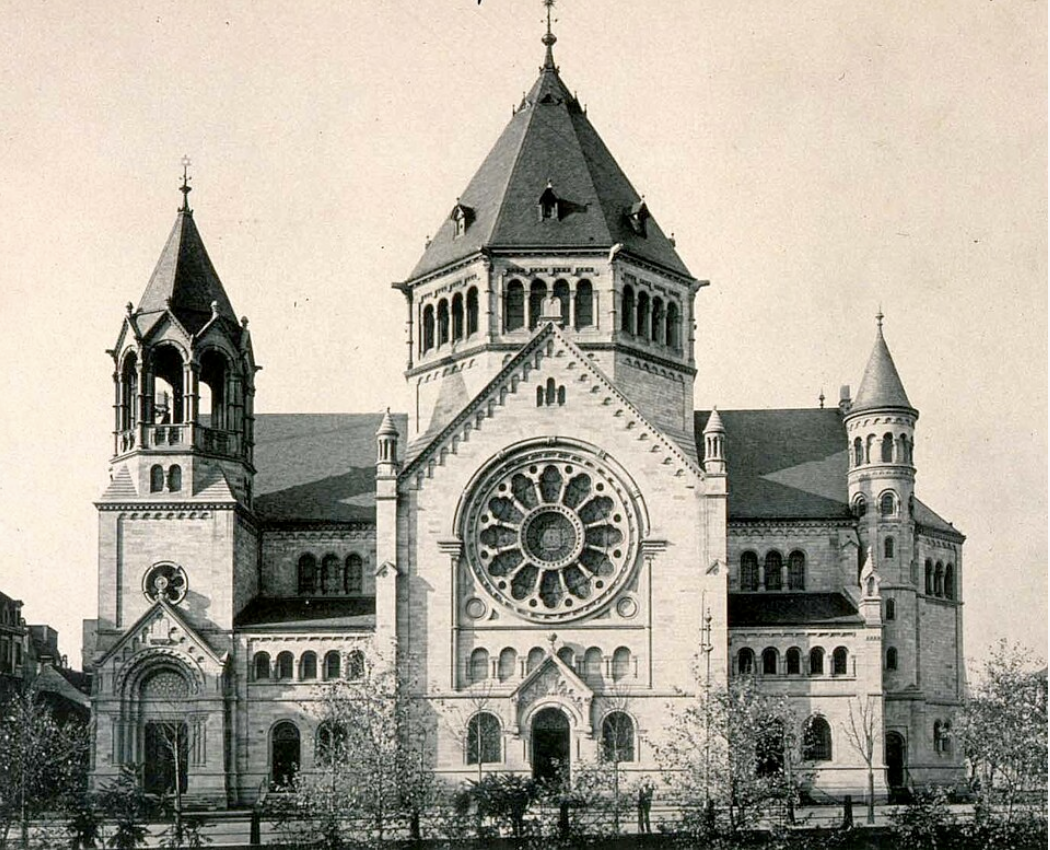
Earlier in the day I'd noticed that there is a tram stop named Ancienne Synagogue Les Halles. I thought it would be interesting to go see that old Synagogue, but then I learned that it had been burned to the ground in September 1940 by a group of Hitler Youths from across the Rhine in Baden.
After the Allied victory, the Jews of Strasbourg who survived the war returned to Strasbourg and built this new synagogue in the 1950s which I ride past every time I take the tram into the city.
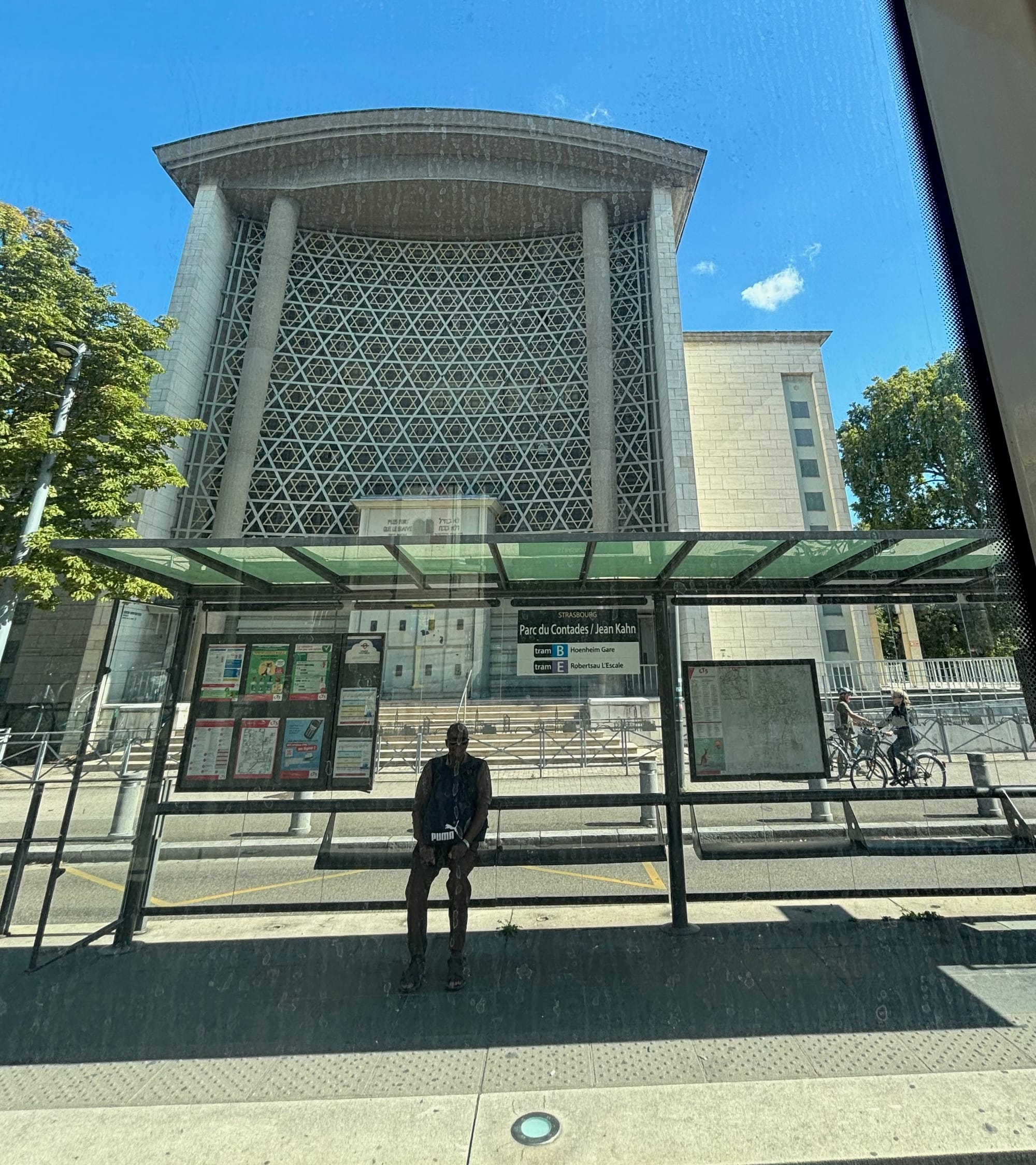
While the Synagogue de la Paix stands as a symbol of survival and cultural persistence, the fact that there's a police van with two officers brandishing machine guns stationed outside that synagogue 24/7 suggests that the history of Jewish precarity in Europe did not end with the defeat of the Nazis. And as the behavior of the Israeli government toward Palestinians demonstrates, the idea that the "droits de l'Homme" are universal and sacrosanct is feeling a bit worse for wear these days as well.
When I was the age of my current students, history was (supposedly) coming to an end. I graduated from college in 1990, one year after the Berlin Wall fell. When I entered college in the fall of 1986 it had been a very different world. As a freshman I signed up for Poli Sci and Russian language classes with the idea that I would somehow do something to end the seemingly intractable Cold War. If you'd told me in 1986 that four years later the speaker at my graduation ceremony would be Mikhail Gorbachev, the last leader of the Soviet Union, I would have never believed you. And if you'd told me in 1990 that in 36 years the US government would be allied with Hitler-admiring far right parties in Germany and throughout Europe, I would have been even more incredulous. But here we are.
Living in history can be terrifying. It can be gloriously triumphant as well. But mostly it's just profoundly unpredictable. Which is why agency, the choices we make as our time on the earth unspools and the only thing we have complete control over, also matters.