Recommended Reading: Leah Sottile's Recent Article about the Students in my History of the Far Right Class
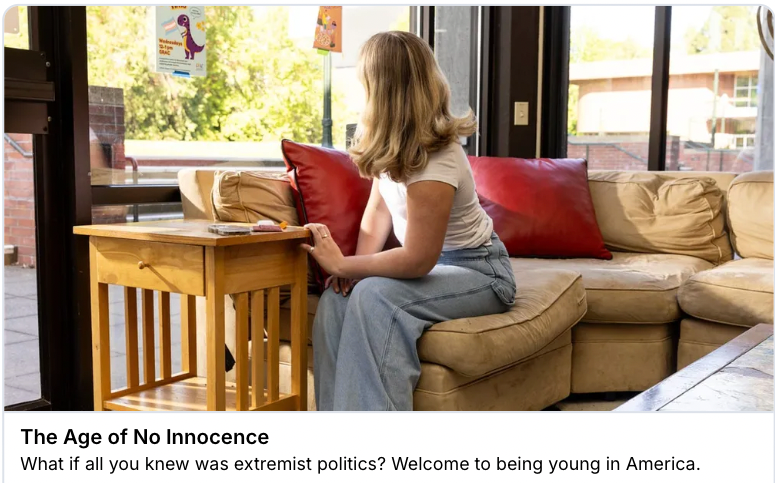
This semester I taught a course on the History of the Far Right in the US. We were lucky to have one of the Pacific Northwest's sharpest contemporary chroniclers and interpreters of the far right, Leah Sottile, spend a day with us. The piece by Leah, "The Age of No Innocence," was inspired by what she heard my students say that day and in subsequent interviews she conducted with them. It's a really moving article about "the kids these days" and I encourage you to read it. What follows are some reflections her piece inspired about how growing up in this Trumpian political moment has shaped the way young people think about the future, the history of their country in general, and the history of the far right in particular.
But first, you should stop listening to me and read Leah's piece.
 Leah Sottile
When Leah joined our class back in February, I asked each student to introduce themselves and say a few words about why they were interested in taking a class on this topic. What struck Leah was how "the far right" was not an abstraction for most students, but was instead a very familiar, even intimate, aspect of their lives, something they'd spent A LOT of time thinking about before they even signed up for this class. Their curiosity about the topic was genuine, and not just academic. It seemed like understanding "the far right" had real stakes for them.
This marks quite a difference between this generation of college students and my own. When I was in graduate school in the early 1990s, I distinctly remember getting the impression that "the history of the far right" or even "the history of conservatism" were NOT topics that aspiring professional historians were encouraged to pursue, let alone organize entire classes around. For the life of me I couldn't have named a single "far right" figure from US History or the present moment when I started college in 1986. If you'd asked me to define or describe "the American far right" when I was an undergraduate history major, I almost certainly would have drawn a complete blank.
In 1994 Historian Alan Brinkley drew attention to this odd lacuna in the scholarship in this now classic article, "The Problem of American Conservatism," published in my 3rd year of graduate school in US History. These final paragraphs of the piece name the problem clearly. To the demographic of people (like myself) who were producing new works of history in the 1990s, it seemed unthinkable that right wing ideas about immigration or race or gender or sexuality or the state or fluoride or [fill in the blanks] had any future ahead of them. So why study such vestigial remnants of the American past? Brinkley correctly argued that this sort of hubris was a "failure of imagination" and a form of professional malpractice.
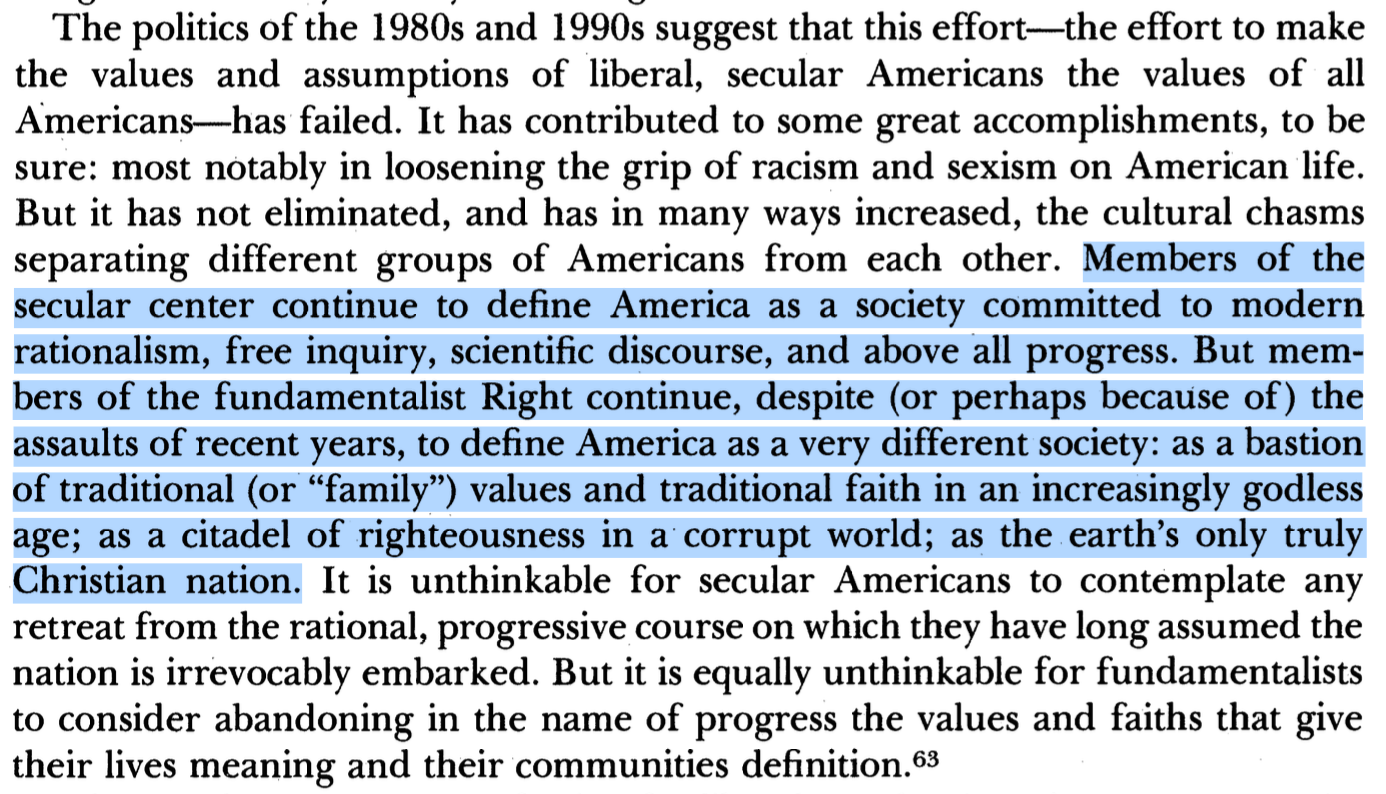
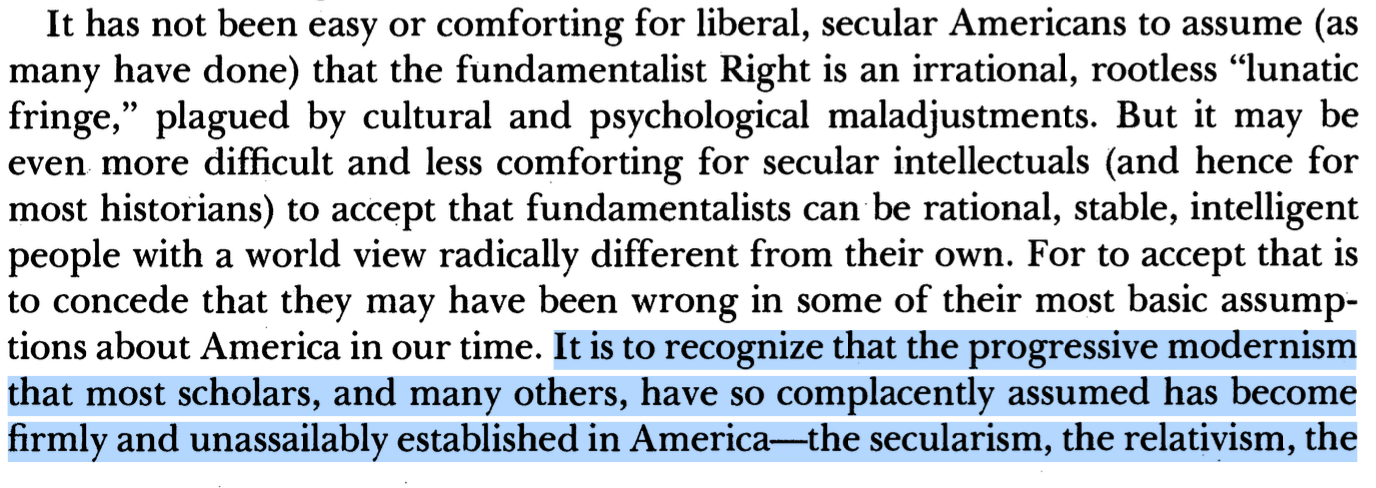
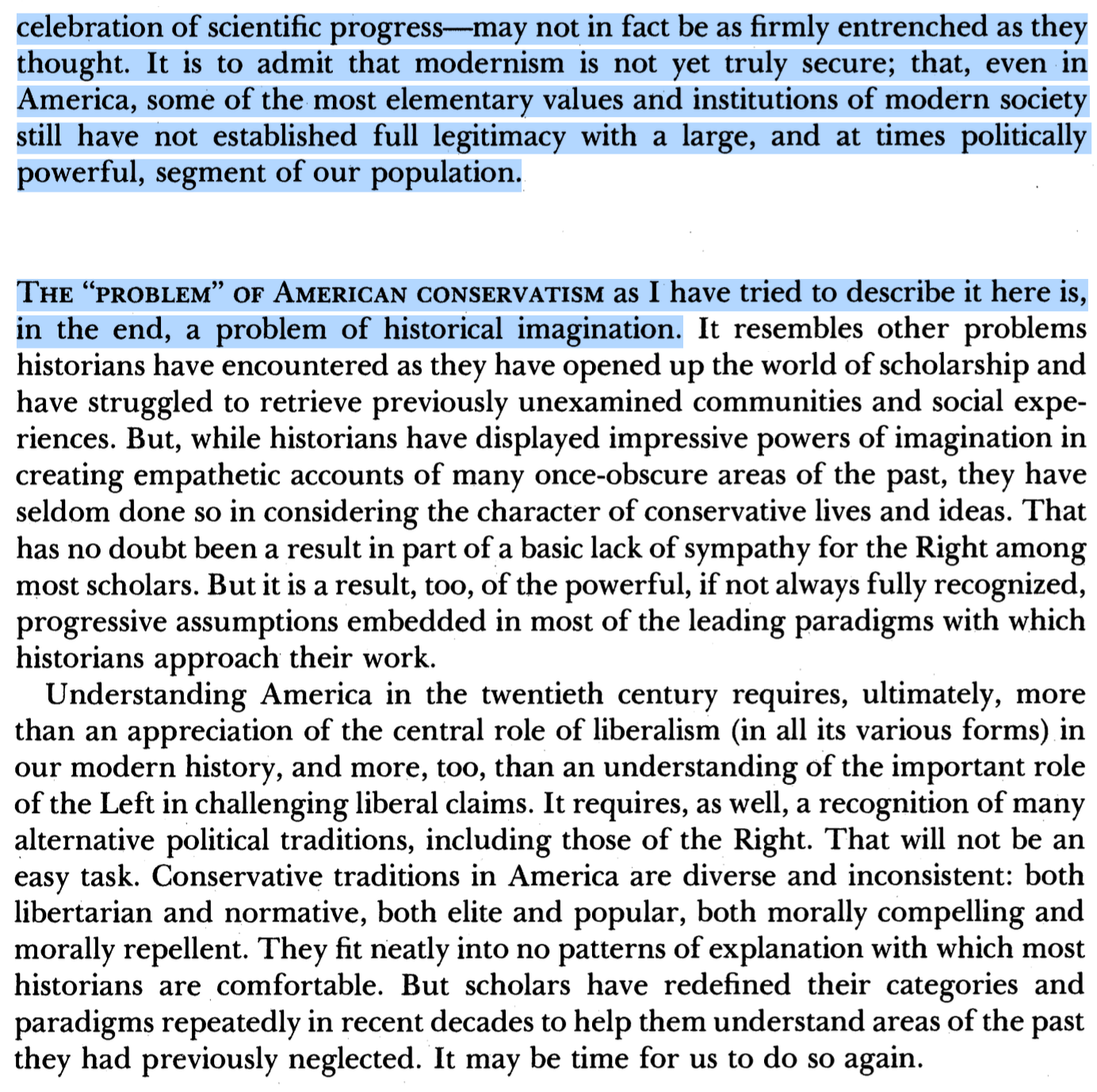
In the thirty years since Brinkley published this article, US historians have produced bookshelves worth of insightful histories of the American right, but to the rising generation of scholars in the 1980s and 90s like myself, it took Brinkley's wake up call to stoke an interest in this topic. The same thing could not be said for the young people I encounter in my classes today. Most of them take for granted that the history of the far right is a worthwhile topic of study. That makes sense given the historical era into which they've been born.
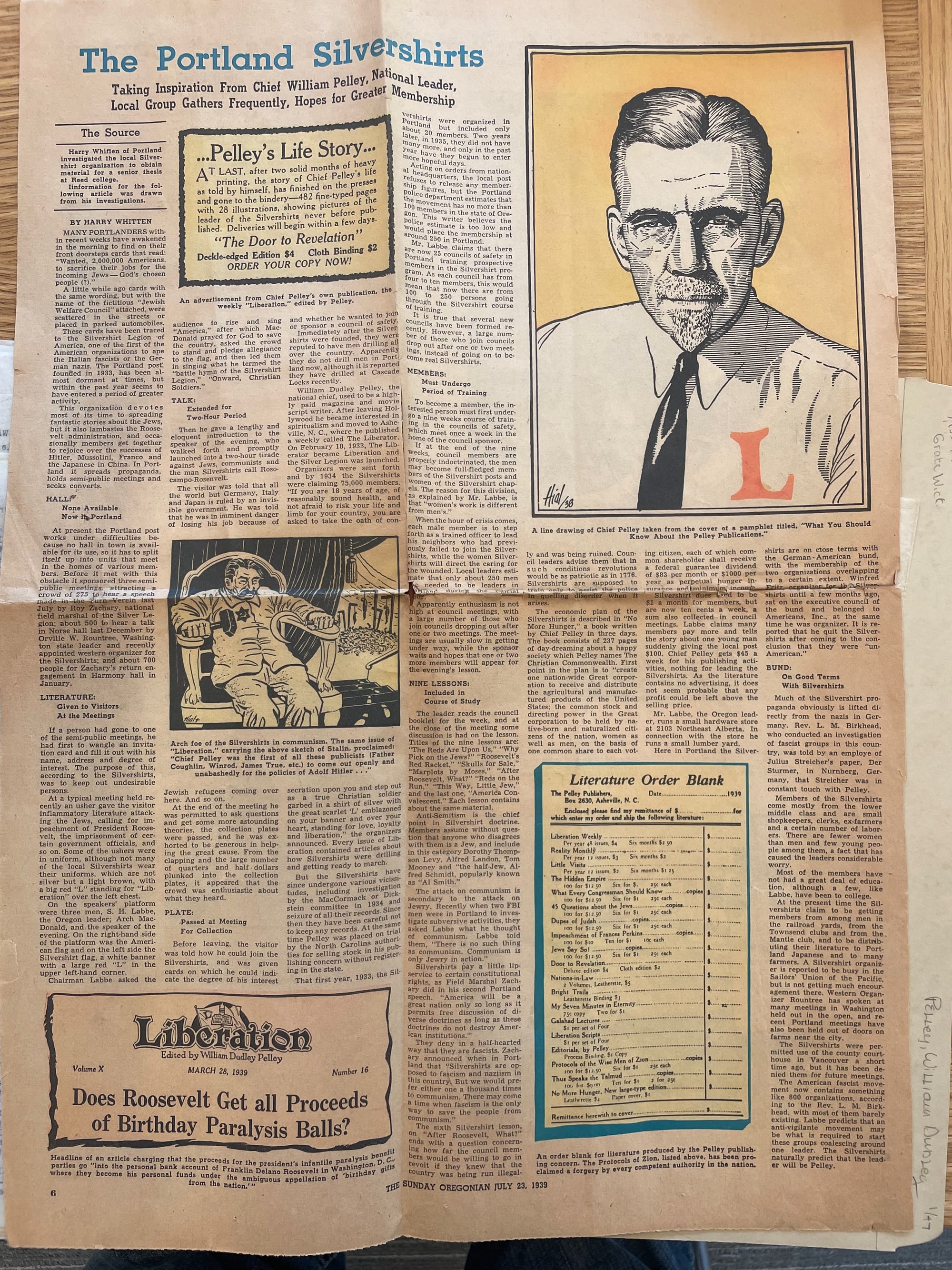
This is far from the first time in US history that college-aged liberals/progressives have become fascinated by the far right. When fascist groups like the Silver Shirts began forming in cities across the country in the 1930s, many young leftists took it upon themselves to either monitor or infiltrate those anti-democratic groups. This Oregonian expose from 1939, for example, was written by a Reed College student who wrote his senior thesis on the Portland Silver Shirts.
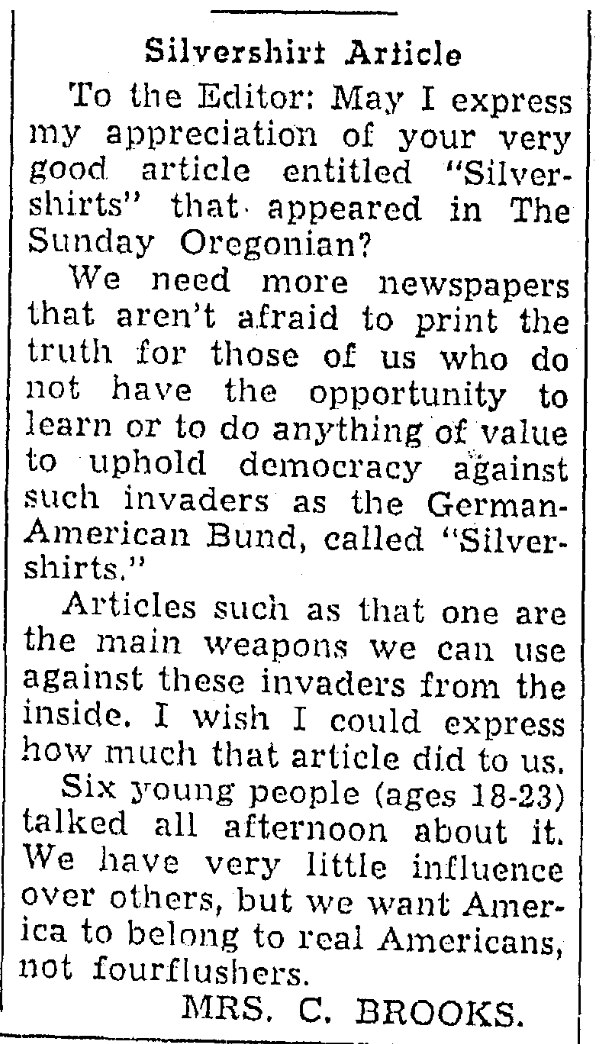
This is one of my favorite "letters to the editor" that I've encountered over my years of newspaper research. "Fourflushers" is one of those words that should definitely re-enter the vernacular.
Just as groups of young people found themselves sitting on stoops and "talking all afternoon" about the danger of the domestic far right in the late 1930s, the same thing happened across the country in the early 1960s as groups like the John Birch Society became a topic of fascination and interest. A few years ago I tracked down and interviewed a young progressive Oregonian from Albany who, in the 1960s, started attending small town John Birch Society meetings out of concerned curiosity. He and his high school friends made the news when they were assaulted at a 1963 right wing meeting in Eugene hosted by Walter Huss, a future OR GOP chair.
 Seth Cotlar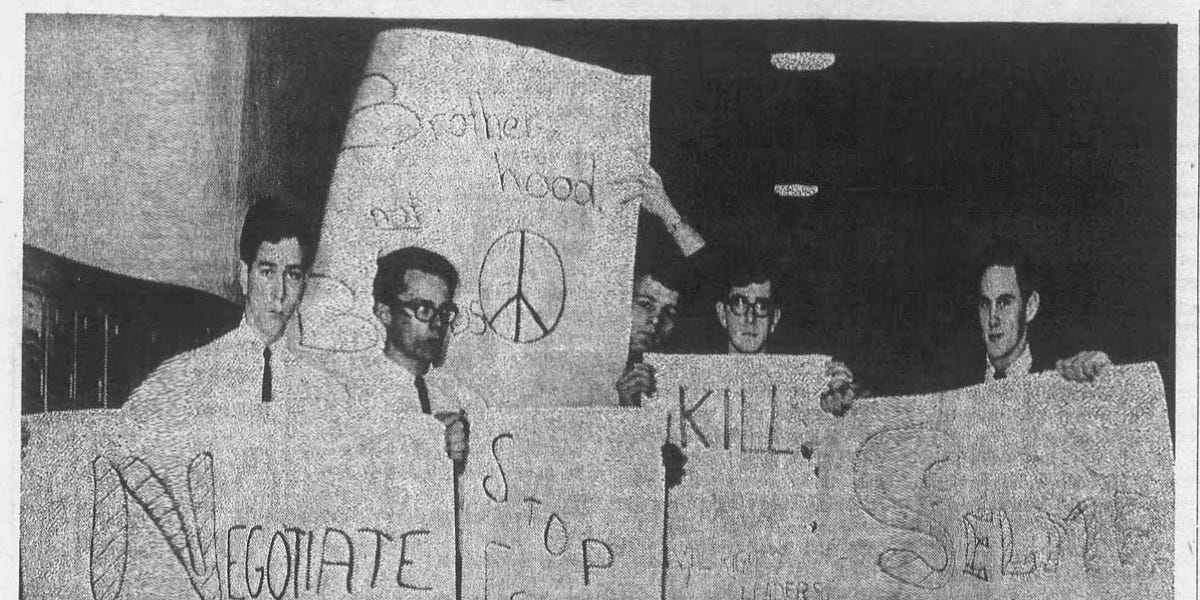
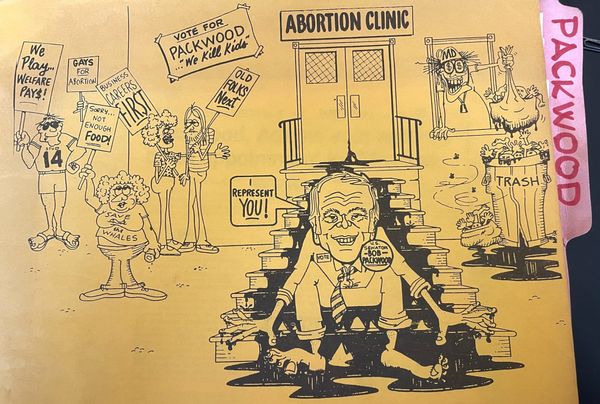
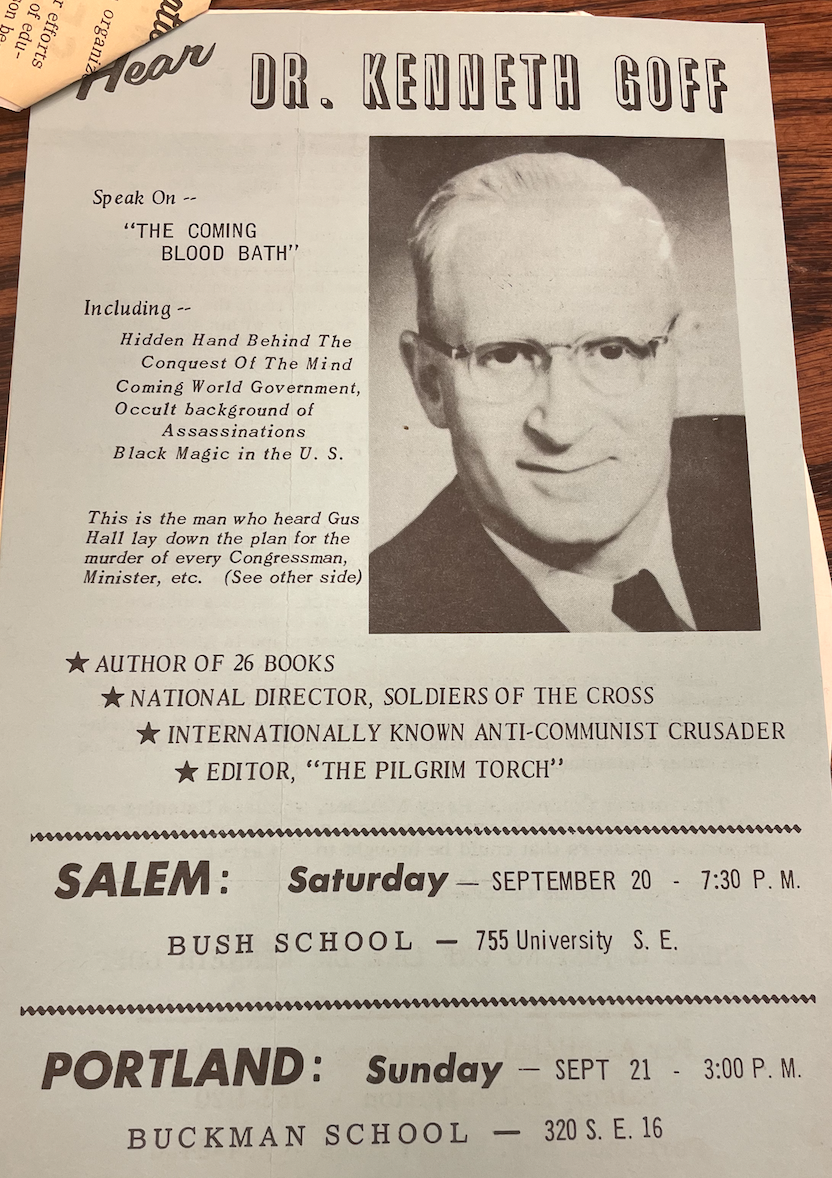
The speaker at that 1963 event was Kenneth Goff, the historical figure who the students in my far right class wrote their final research papers on. Like their 1960s predecessor, my students found Goff quite compelling (even if they also found his racism, sexism, antisemitism, violent ideation, and grifting lies repellant). It was immensely gratifying to see students eagerly pouring through thousands of pages of FBI files on Goff as they tried to piece together the details of his life and political activities, but it also made me sad that this fairly obscure, odious, and prolific fascist from the Cold War era felt so relevant and familiar to them.
Generalizations are dangerous, but it is my conviction that each generation has a distinctive way of seeing the world--a time-bound perspective that is simultaneously enabling and limiting. As a GenXer, I was socialized to think of far right folks like Goff as irrelevant "kooks," and I now look back upon that perspective, which I still haven't entirely exorcised, as heavily blinkered. In an upper-level Modern US History course in 1989 I was assigned a book by Alan Brinkley that talked about depression-era demagogues like Father Coughlin and Gerald LK Smith. I found it fascinating, but those historical figures seemed like vestiges from a long dead past to me, like picaresque characters from a Tom Waits song you might stumble into a conversation with in some lonely diner late at night. It never occurred to me that the ideas they articulated had a viable future in the US.
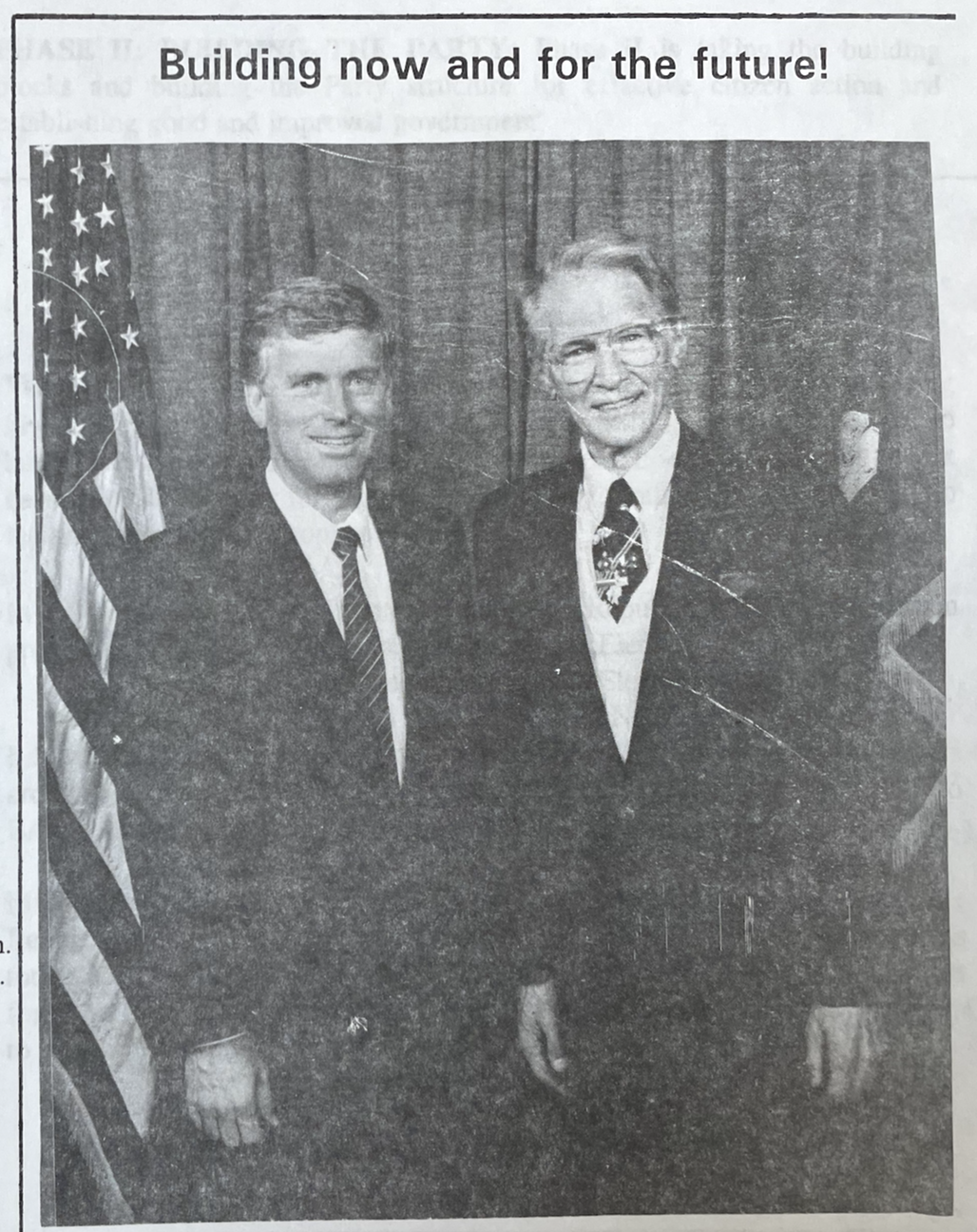
And now here I am in 2026, amidst a rising tide of America First Christian Nationalism, writing a book about a chair of the Oregon Republican Party ca. 1978-9 who was a Coughlinite fascist in the 1930s and a lifelong acolyte of Gerald LK Smith. If you'd told me in the 1990s that I would be writing and teaching about conspiracy-addled, antisemitic "kooks" like Gerald LK Smith because their political ideas had experienced a renaissance in the 21st century, I would have looked at you like you had two heads. If you'd told me in the 1990s that the US would soon elect a Black president with the middle name of "Hussein" and that same-sex marriage would become legal, I also would have looked at you like you had two heads. History has a way of surprising us, for both better and worse.
Seth Cotlar
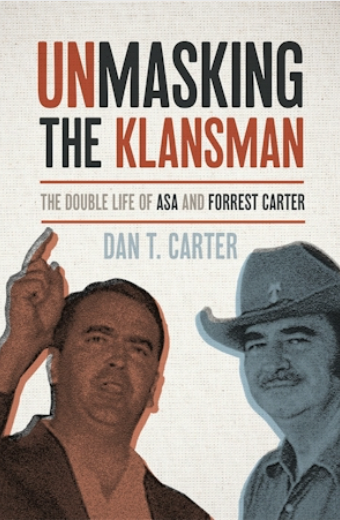
The students in my History of the Far Right class this semester read this great book by Dan Carter. As they learned about the US far right of the 1950s and 60s, students often remarked on how familiar many of the fascist talking points and tactics of that era were to them because they constantly see similar stuff online today. I couldn't tell whether they found that depressing (it's ever been thus), or slightly comforting (we've been here before and survived it).
Leah's article detailed the myriad ways in which the darkness of our present moment has shaped the world views of today's college-aged students. It makes me want to curse their elders (myself included) who have created this terrifying historical moment that they've had no choice but to grow up in. But their jadedness can also be interpreted as a form of hard-won wisdom, a clear-eyed assessment of the depth and power of the illiberal, far right currents that course through US history. I was of a generation that lacked this insight. Most of us GenXers were naively shocked by the OKC bombing and were eager to accept the line that McVeigh was a lone wolf with a few "kooky" friends who lived on the far fringes of US culture. But that was delusional self-protection, a way of not seeing what was happening around us.
A common sentiment I see these days on social media is "there's no way out but through." I think/hope that the students in my class this semester did NOT experience our immersive study of the far right as an exercise in wallowing in a sea of horribleness, but rather as an honest reckoning with some of the powerful, anti-democratic energies that have shaped US politics and culture for the past 100+ years. A central premise of my work as both a teacher and writer is that the best way to overcome these deeply-rooted, anti-democratic forces is to address them head on with empirical rigor, a genuine desire to understand, and the moral clarity to distinguish between understanding a phenomenon and condoning it. As I read the excellent final projects students produced for that class, I'm happy to report that this was the spirit in which they too engaged in this work.